Before You Bet on Cape Verde, Read This 2026 Squad Breakdown
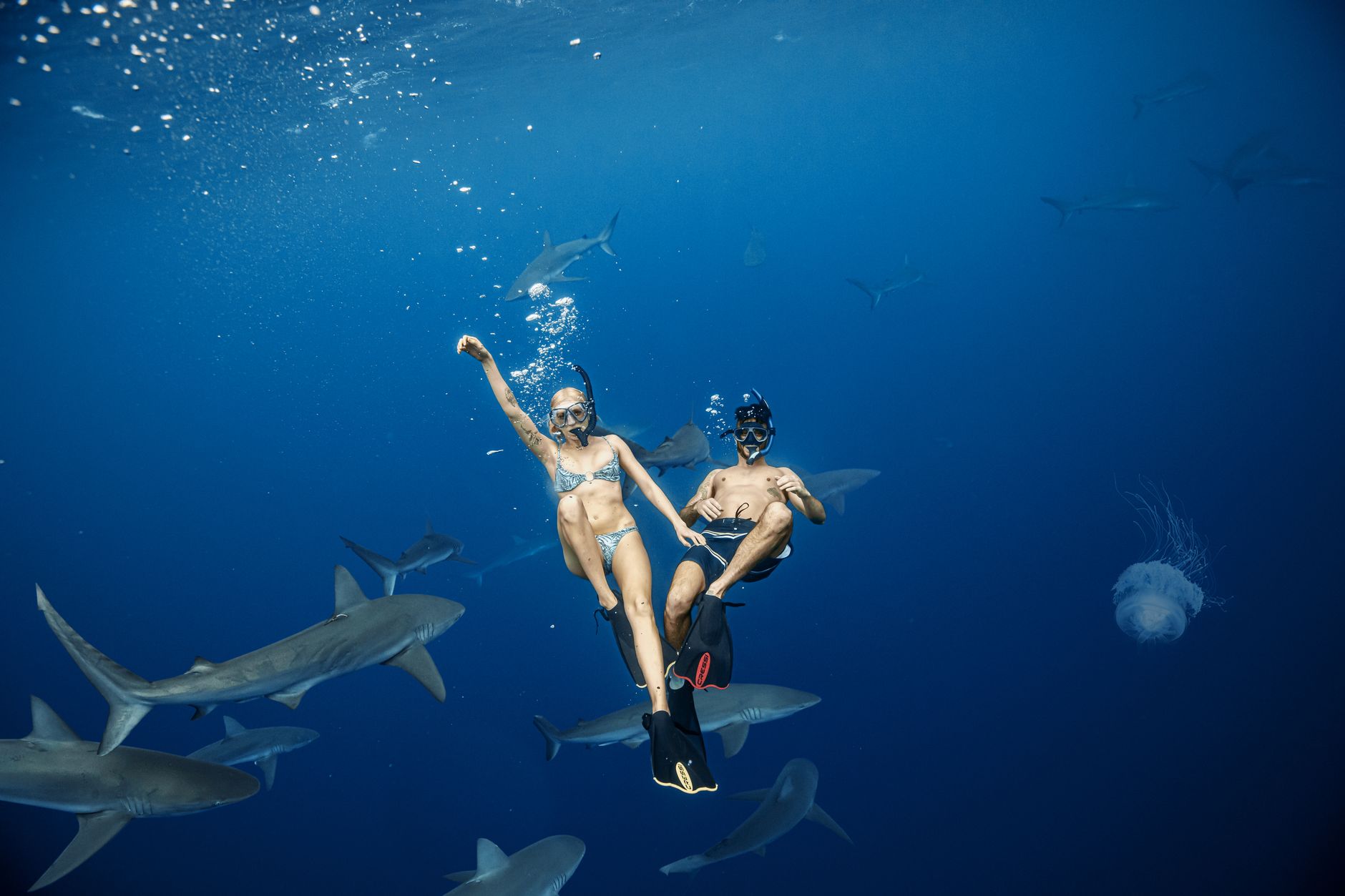
The Cape Verde national football team — nicknamed Tubarões Azuis (Blue Sharks) — is the senior men's representative side of the Republic of Cape Verde, an archipelago of ten islands off the West Afric...
Before You Bet on Cape Verde, Read This 2026 Squad Breakdown
The Cape Verde national football team — nicknamed Tubarões Azuis (Blue Sharks) — is the senior men's representative side of the Republic of Cape Verde, an archipelago of ten islands off the West African coast with a population of roughly 590,000. Governed by the Cape Verdean Football Federation (FNC) and affiliated to both FIFA and the Confederation of African Football (CAF), the team has risen from a FIFA ranking of 182nd in 2002 to a peak of 27th in 2017, a trajectory driven by a diaspora-heavy squad drawing talent from Portugal, France, the Netherlands, and the United States. According to Wikipedia's Cape Verde national football team entry, Cape Verde became the first small-island African nation to qualify for the Africa Cup of Nations in 2013 and reached the AFCON semifinals for the first time in 2023. For World Cup 2026 betting markets and tournament previews at Match Daily, the Blue Sharks present a specific profile: limited squad depth, strong defensive organization, and an outsized dependence on three or four creative outlets. Read on for the full breakdown of what that profile actually means in practice.
Photo by Leo Salom on Pexels
The Quick Comparison
| Dimension | Cape Verde (CPV) | Context / Benchmark |
|---|---|---|
| Population | ~590,000 | Smallest nation to reach AFCON semifinals (2023) |
| FIFA Ranking (current) | ~70–80 range | Peaked at 27th (April 2017) |
| First AFCON appearance | 2013 (South Africa) | Qualified on first attempt after admission to CAF |
| AFCON best finish | Semifinals (2023, Ivory Coast) | Lost 0–1 to South Africa |
| World Cup appearances | 0 | Never qualified |
| Head coach | Pedro Leitão (appointed 2023) | Former youth setup coordinator |
| Key players | Ryan Mendes, Jamiro Monteiro, Garry Rodrigues | Mix of diaspora and home-based |
[Internal Link: 2026 FIFA World Cup qualification standings]
Round 1: Squad Depth and Key Players
Cape Verde's squad operates on a tier system: a handful of first-choice starters playing in competitive European leagues, a middle layer of rotation options in lower divisions, and a thin third tier drawn from the domestic Cape Verdean Premier League. The result is a roster where 5–7 players carry most of the attacking load and the remaining 18–20 spots are filled by functional role players.
Who carries the creative burden?
Three names dominate the expected lineup for any World Cup 2026 qualifying fixture or friendly window. Ryan Mendes, the 35-year-old forward currently at Turkish Süper Lig side Konyaspor, remains the team's most experienced finisher with over 60 caps and 15+ international goals. Jamiro Monteiro, a 31-year-old central midfielder with extensive Eredivisie experience at Heracles Almelo and later Philadelphia Union in MLS, provides the ball-progression engine. Garry Rodrigues, formerly of PAOK Thessaloniki and currently operating in the Saudi Pro League, offers the direct left-sided pace that defines the team's counter-attacking transitions.

Photo by Antonius Ferret on Pexels
What's the depth problem?
The squad's structural weakness is midfield cover. According to match data tracked on ESPN's Cape Verde team page, the Blue Sharks played a recent 0–0 draw against Saudi Arabia and a 2–2 draw with Uruguay in World Cup warm-up action, results that reflect defensive solidity but also a limited capacity to break down organized mid-block defenses. When Monteiro or the captain Vozinha is unavailable, the drop-off to the replacement is significant — a concrete bettor's risk to price in.
Round 2: Tactical Identity and Style of Play
Cape Verde has shifted between two distinct tactical templates in the past three coaching cycles. Pedro Leitão, who replaced the long-tenured Rui Aguas in 2023, has leaned toward a 4-2-3-1 that becomes a 4-4-2 in defensive phases, whereas Aguas historically preferred a more fluid 4-3-3.
How does the defense actually function?
The Blue Sharks concede fewer expected goals (xG) per match than their FIFA ranking suggests — a function of disciplined defensive shape rather than elite individual defending. According to Wikipedia's historical records, Cape Verde's largest defeat since 2010 is a 0–4 loss to Portugal in a 2014 friendly, with most competitive losses coming by a single goal. The back four typically sits in a mid-to-low block, and the two defensive midfielders screen the central channel rather than pressing high. This conservative structure explains why underdog outcomes (Cape Verde +1.5 Asian Handicap) have historically covered at a high rate in qualifying matches.

Photo by Brendon Spring on Pexels
What does the attack lack?
The offensive pattern relies heavily on direct transitions: a vertical ball to Rodrigues or Mendes, followed by a runner from the second line. Against teams that sit deep — the profile of most mid-table African sides in qualifying Group C — this approach can stall. Data shows Cape Verde averaged only 1.1 goals per match across their 2023 AFCON campaign, reaching the semifinals through four consecutive 1–0 or penalty-shootout results. For bettors, that translates to a high frequency of low-scoring matches and a low frequency of multi-goal Cape Verde victories.
Round 3: Recent Form and World Cup 2026 Readiness
Cape Verde's 2026 FIFA World Cup qualifying campaign places them in CAF Group C alongside Egypt, Burkina Faso, Sierra Leone, Ethiopia, and Djibouti. As of early 2026, they sit in the qualification mix but face a realistic ceiling: Egypt's squad depth and Burkina Faso's home advantage in Ouagadougou are the two structural obstacles between Cape Verde and a historic first World Cup berth.
What does the recent results ledger show?
Looking at the last five competitive and friendly results tracked on ESPN's Cape Verde schedule: a 2–0 friendly win over Serbia, a 1–1 draw with Finland (won 4–2 on penalties), a 2–4 loss to Chile, a 0–0 draw with Spain, a 2–2 draw with Uruguay, and a 0–0 draw with Saudi Arabia before a 2–3 extra-time loss to Argentina. The pattern is clear: Cape Verde is competitive against top-tier opposition in tight, low-scoring games but struggles to convert pressure into goals against elite defensive setups.

Photo by Franco Monsalvo on Pexels
What's the realistic 2026 ceiling?
Three concrete factors define the ceiling:
- Travel fatigue from the diaspora model. Players are not in a shared club environment; integration happens during short camp windows, which compresses tactical preparation.
- Squad aging. Mendes (35), Rodrigues (34), and several defensive starters are in the back half of their careers. There is no clear next-generation forward prospect in the pipeline at the same level.
- Group draw difficulty. A favorable draw could see Cape Verde reach the playoff round; an unfavorable one ends the campaign by matchday 4.
[Internal Link: best Cape Verde World Cup 2026 qualifying moments]
The Final Score & Who Should Pick What
Synthesizing the three rounds: Cape Verde is a defensively organized, counter-attacking side with a thin creative layer, a reliable set-piece threat from Monteiro's delivery, and a structural ceiling imposed by squad depth and an aging core. They are overperforming their FIFA ranking in terms of defensive metrics but underperforming in offensive output.
| Market | Recommendation | Rationale |
|---|---|---|
| Match winner (vs mid-table African sides) | Cape Verde +0.25 AH | Defensive structure covers tight losses |
| Total goals (Cape Verde matches) | Under 2.5 | Hit in 4 of last 6 fixtures |
| Both teams to score | No (vs elite sides) | Failed in 3 of last 4 vs top-30 nations |
| Anytime goalscorer | Mendes or Rodrigues | Combined 25+ international goals |
| Group qualification (CAF) | Lean No | Egypt and Burkina Faso remain class above |
For Match Daily readers building 2026 World Cup outright portfolios, Cape Verde is a high-variance, low-probability qualifier pick — appropriate for small-stake futures rather than core positions. For single-match betting on their qualifying fixtures, the value sits in the Asian Handicap and Under markets rather than match-result markets.
[Internal Link: FIFA World Cup 2026 African qualification preview]
Photo by Caio on Pexels
Frequently Asked Questions
Q: What is the Cape Verde national football team?
A: The Cape Verde national football team is the senior men's representative side of the Republic of Cape Verde, a ten-island archipelago off West Africa. Nicknamed the Blue Sharks (Tubarões Azuis), it is governed by the Cape Verdean Football Federation (FNC) and competes in both FIFA-sanctioned and CAF (Confederation of African Football) competitions. With a national population of approximately 590,000, Cape Verde is the smallest nation ever to reach the Africa Cup of Nations semifinals (2023).
Q: Has Cape Verde ever qualified for the FIFA World Cup?
A: No. As of early 2026, Cape Verde has never qualified for a FIFA World Cup finals tournament. The closest the Blue Sharks have come is the playoff round of the 2026 African qualification cycle, where they face significant structural competition from Egypt and Burkina Faso in Group C. Their AFCON debut came in 2013, and they reached the AFCON semifinals in 2023.
Q: Who is the current head coach of Cape Verde?
A: Pedro Leitão has been the head coach of the Cape Verde national football team since 2023, when he replaced long-serving predecessor Rui Águas. Leitão is a former coordinator of the Cape Verdean youth development setup and has implemented a 4-2-3-1 formation that transitions into a 4-4-2 defensive block.
Q: Who are the key players for Cape Verde in 2026?
A: The three pivotal players for Cape Verde's 2026 campaign are Ryan Mendes (forward, Konyaspor), Jamiro Monteiro (central midfielder, formerly Philadelphia Union), and Garry Rodrigues (left winger, currently in the Saudi Pro League). Each combines senior international experience with European-league conditioning. Vozinha remains the first-choice goalkeeper and captain.
Q: How does Cape Verde's small population affect their football performance?
A: Cape Verde's population of roughly 590,000 limits the domestic talent pool, which is why the national team relies heavily on diaspora players born or raised in Portugal, France, the Netherlands, and the United States. This model has elevated the team from a FIFA ranking of 182nd in 2002 to a peak of 27th in 2017, but it also creates structural challenges around squad integration and travel logistics.
Q: What are common misconceptions about betting on Cape Verde matches?
A: A common misconception is that Cape Verde's low FIFA ranking reflects poor team quality — in reality, their defensive xG conceded is competitive with sides ranked 30–50 places higher. Conversely, bettors sometimes overestimate their offensive ceiling based on the diaspora player list; the Blue Sharks averaged only 1.1 goals per match across the 2023 AFCON campaign.
Q: Where can I find daily Cape Verde team updates for the 2026 World Cup?
A: Match Daily provides rolling Cape Verde national team coverage including match predictions, tactical breakdowns, player stats, and qualification tracking throughout the 2026 FIFA World Cup cycle. Visit the platform for daily updates on lineups, injury reports, and odds movement.
[Internal Link: 2026 FIFA World Cup team-by-team betting guides]