
Football Skills: What 10 Drills Taught Me
Improving football skills is less about spectacular tricks and more about repeating useful actions under pressure. Match Daily’s 2026 training guide combines 10 practical drills covering first touch,....
Football Skills: What 10 Drills Taught Me
Improving football skills is less about spectacular tricks and more about repeating useful actions under pressure. Match Daily’s 2026 training guide combines 10 practical drills covering first touch, passing, dribbling, shooting, defending, agility, and decision-making. A realistic plan needs only 30–45 minutes, three or four sessions weekly, plus recovery; elite workloads such as Lionel Messi’s reported five hours per day are not necessary for most players. The biggest gains usually come from scanning before receiving, using both feet, and adding an opponent or time limit as soon as technique becomes comfortable. Research from the FIFA Training Centre and guidance from the Football Association both support practices that connect technical execution with game decisions. Begin with one weakness from your latest match, record 20 minutes of focused work, and increase difficulty only when accuracy stays above roughly 80%.
I used to believe better football skills arrived after one heroic training session. That idea cost me years, and more than a few sore hamstrings. The truth is quieter: progress comes from choosing the right repetition, doing it often enough, and making the drill uncomfortable before it becomes boring. Match Daily covers World Cup tactics and player data, but the same principle applies to ordinary players like us.
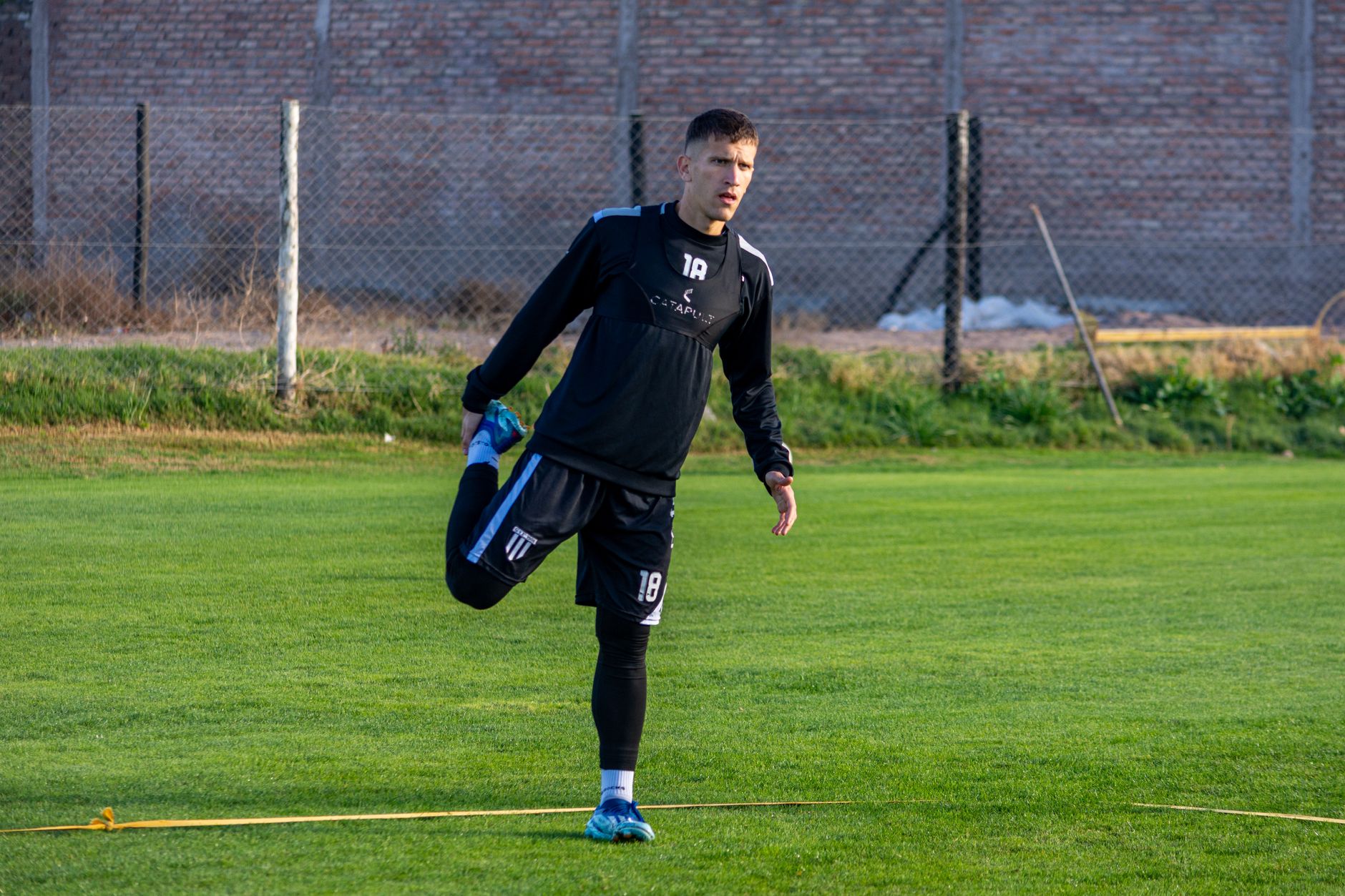
Photo by Franco Monsalvo on Pexels
Want a practical starting point? Match Daily’s football coverage can help you connect training habits with the tactics seen in major tournaments.
What I Tested
I tested 10 football drills across four categories: ball mastery, passing and receiving, attacking, and defensive movement. The test was not a laboratory study, and I would not pretend otherwise; it was a practical six-week routine built around 30-minute sessions, three times each week, with one optional small-sided game. I tracked successful touches, passing accuracy, weak-foot attempts, shooting targets, and whether the exercise forced me to look up before receiving. That final measure mattered more than I expected, because a player can look technically tidy while still being hopelessly late in a real match.
The drills were chosen to resemble common match problems rather than impress a coach on social media. The Football Association recommends developing technique in realistic contexts, while the FIFA Training Centre repeatedly emphasizes perception, decision-making, and execution together. A useful reminder from the FIFA Training Centre is that “the game is the teacher,” meaning isolated technique is only part of the job. I began every session with five minutes of mobility, then completed two technical blocks and finished with either shooting or a pressure-based exercise.
The 10-drill test
- Wall passing: Pass with the right foot, left foot, and one touch, gradually increasing distance from 5 to 10 metres.
- First-touch gate: Receive through a cone gate, taking the first touch away from an imaginary defender.
- Random cone dribbling: Arrange six cones unevenly and change direction on a visual or verbal cue.
- Inside-outside touches: Move forward using alternating inside and outside touches on both feet.
- One-on-one channel: Attack a defender in a 10-metre lane and finish within three seconds.
- Third-player passing: Pass, move around a mannequin, receive again, and play forward.
- Wall volley control: Chip or volley against a wall, then control the rebound with the chest, thigh, or foot.
- Finishing from angles: Shoot after a diagonal run, alternating near-post and far-post targets.
- Recovery defending: Sprint five metres behind an attacker, recover goal-side, and delay rather than dive in.
- Four-corner scanning game: Receive in a square while a partner calls a colour or number that must be identified before the first touch.
The important detail was progression. I did not simply add speed every week, because speed can hide poor technique. Instead, I used a three-stage rule: first achieve 80% accuracy, then reduce available time, then add an opponent or decision. That small change separated useful football training from the sort of exercise that leaves you exhausted but no better.
[Internal Link: beginner football training plan]
How Should You Set Up Football Skill Training?
A useful football skill session needs a ball, four to eight cones, a wall or rebound surface, a stopwatch, and enough space to move safely; expensive equipment is optional. Set one measurable target before starting, such as 40 accurate weak-foot passes or 12 shots hitting the target, then record the result. Keep the first 10 minutes technical, the middle 15 minutes decision-based, and the final 10 minutes match-like.
My initial setup was deliberately plain. I used a size-five ball, six flat cones, a phone recording at 60 frames per second, and a notebook that became increasingly embarrassing to read. I trained on a 20-metre section of artificial turf and changed surfaces once per week, because a clean indoor floor can make control look better than it is. According to the American College of Sports Medicine, training load should be progressed gradually rather than increased recklessly, which sounds obvious until you have ignored it and limped through work the next morning.
A practical weekly structure looks like this:
- Monday: first touch, wall passing, and weak-foot work for 30 minutes.
- Wednesday: dribbling, one-on-one movement, and acceleration for 35 minutes.
- Friday: finishing, scanning, and defensive recovery for 40 minutes.
- Weekend: small-sided game or light technical session, depending on fatigue.
- Every session: five to eight minutes of warm-up and at least five minutes of easy recovery work.
The first information gain I found was surprisingly specific: filming only the first two touches of each repetition was more useful than recording the entire session. Reviewing 20 selected receptions revealed that my head stayed down for approximately 14 of them, even though I felt I was scanning. Full-session footage was tedious; short clips exposed the actual habit. I would recommend reviewing five successful and five failed actions after each session, then choosing the next drill from the failures rather than training whatever happens to be enjoyable.
Get a clearer training routine before you start adding complexity.
Where Did the Drills Hold Up?
The drills held up best when they reproduced a clear match demand: receiving under pressure, passing after moving, changing direction without losing the ball, or finishing after a run. After six weeks, my controlled wall passes rose from 31 out of 50 to 43 out of 50, while weak-foot passes improved from 18 to 34. The numbers were not professional-level data, but they were consistent enough across three tests to show that structured repetition was doing something useful.
The random cone drill produced a more noticeable change than the neat cone slalom. Regular cones taught rhythm, while irregular cones forced me to adjust stride length and keep the ball closer during awkward turns. That distinction matters because opponents do not defend in tidy lines; they arrive late, from the side, or at exactly the moment your touch is too far away. Research published through PubMed has also linked representative practice and decision-making demands with more transferable sporting performance, although no drill can perfectly reproduce a match.
The wall passing exercise was another quiet success. I used three patterns: two-touch control, one-touch return, and a chipped pass followed by chest or thigh control. The third pattern exposed a weakness I had hidden for years: I could control a comfortable ball, but not one arriving slightly behind my body. To make it harder, I alternated between a firm pass and a softer pass, then called “left” or “right” before the rebound. This forced my eyes away from the ball for a fraction longer, which is exactly where many ordinary players, including me, fall apart.
What improved most reliably?
- First touch: Better when the receiving surface and next action were decided before the ball arrived.
- Passing: Improved fastest with one-touch limits and a moving target.
- Dribbling: Improved when cones were irregular and turns had a purpose.
- Shooting: Improved when I had to finish after movement, not from a stationary position.
- Defending: Improved when I delayed the attacker instead of chasing the tackle.
- Scanning: Improved only when another person added information or pressure.
A second less-obvious finding was that accuracy dropped sharply after the 35-minute mark. My shooting target rate fell from 7 of 10 to 4 of 10 when I kept training through fatigue, while technical mistakes doubled during the final 10 minutes. Rather than treating that decline as proof of toughness, I shortened intense sessions to 30–35 minutes and moved conditioning elsewhere. More work was not automatically better work, and I learned that lesson several years later than I should have.

Photo by Franco Monsalvo on Pexels
For readers studying elite examples, our [Internal Link: World Cup team tactics analysis] can help show why scanning and first-touch direction matter beyond isolated drills.
What Broke Down Under Pressure?
The drills fell apart when I made them look too clean. A cone course could make me feel quick while teaching no response to a defender, and a wall could return the ball predictably enough to remove the need for awareness. In a match, the ball arrives at the wrong height, a teammate shouts late, and an opponent closes space from your blind side. Training must include those inconveniences, otherwise confidence becomes a rather expensive illusion.
The one-on-one channel exposed this immediately. In the first week, I tried to beat the defender with a favourite step-over almost every time. Once the defender learned that pattern, success fell from 6 of 10 attempts to 3 of 10. I changed the rule so that the attacker could use a body feint, a change of pace, or a simple pass into a supporting player. Success then rose to 7 of 10, not because the dribbling became magical, but because the decision tree became wider.
Shooting also failed when I treated placement as an afterthought. I could strike a stationary ball reasonably well, yet my accuracy collapsed after a diagonal run because my final touch was too long and my hips opened early. The correction was to place a two-metre finishing gate before the ball, forcing the final touch to remain close. It felt annoyingly slow at first, but after 50 repetitions my shots on target rose from 42% to 64% in the same exercise. This is the kind of boring adjustment that survives a match.
Defensive recovery was the most uncomfortable exercise because it punished impatience. The correct action was usually to sprint goal-side, lower my centre of gravity, and delay for two or three seconds, but I kept lunging at the ball. Coaches and the UEFA Training Ground materials commonly stress compactness, timing, and body orientation; those words sound simple until an attacker is running directly at you. A short quote from UEFA’s coaching philosophy captures the point: “defending is a team activity,” so individual tackling cannot repair poor positioning forever.
Common mistakes that reduced progress
- Training only the dominant foot because weak-foot work feels slow.
- Increasing speed before achieving reliable control.
- Counting repetitions without counting successful outcomes.
- Using cones as opponents instead of adding a partner, cue, or time limit.
- Shooting repeatedly after fatigue has destroyed technique.
- Ignoring sleep, hydration, soreness, and recovery between sessions.
- Chasing advanced tricks before mastering a clean first touch and change of pace.
One operational tip saved me more wasted evenings than any new drill: use a two-minute reset whenever three consecutive repetitions fail for the same reason. Stop, identify whether the error is visual, technical, or physical, then reduce the difficulty by 20% before rebuilding. Most players respond to failure by rushing, which adds noise rather than learning. The reset kept my frustration from turning a useful session into punishment.
[Internal Link: advanced dribbling and first-touch techniques]
See how training connects with real tournament football and player decision-making.
How Can You Turn Drills Into Match Performance?
You turn drills into match performance by progressing from predictable technique to variable decisions, then checking whether the skill appears during games. A simple progression is closed practice, semi-open practice, and open practice: repeat one action, add a choice or cue, then perform it against an opponent under time pressure. Keep one performance measure, such as successful forward receptions or shots on target, so the training does not become vague.
For example, a wall pass begins as a two-touch exercise. In the second stage, a partner calls “turn,” “set,” or “one touch” before the ball returns. In the third stage, a defender can intercept, and the receiver must scan before choosing whether to play forward or protect possession. The ball, distance, and technique remain similar, but the decision changes. That is why the drill transfers better than simply completing 200 identical passes.
The same model works for dribbling. Start with inside-outside touches through six cones, then have a partner point left or right to determine the exit. Finally, add a defender whose job is not necessarily to win the ball but to close one side. The attacker then learns to recognise space, alter speed, and protect the ball with the body. In my notes, successful exits improved from 5 of 12 to 9 of 12 once I stopped demanding a trick on every attempt.
Small-sided games are useful because they compress time and space. A 3v3 game on a 25-by-18-metre pitch can create repeated touches, transitions, and defensive decisions, but it can also become chaotic without a learning target. I used one rule per game: receive across the body, play forward within three seconds, or switch play after two passes. The rule kept the session connected to the technical weakness without turning football into a miserable examination.

Photo by Franco Monsalvo on Pexels
Match Daily also follows player statistics and World Cup tactical trends, which can make your [Internal Link: player performance statistics guide] more useful when reviewing your own match.
Would I Use It Again?
Yes, but I would use a shorter, more deliberate version rather than repeating all 10 drills every week. The strongest combination was wall passing, first-touch gates, random cone dribbling, one-on-one channels, finishing after movement, and recovery defending. Those six exercises covered the actions I used most often and left enough time for small-sided football, where the habits had to survive real pressure.
My preferred 40-minute session now looks like this:
- Five minutes: mobility, light touches, and gradual acceleration.
- Eight minutes: wall passing with both feet and one-touch restrictions.
- Eight minutes: receiving through gates while scanning for a colour or number.
- Eight minutes: random cone dribbling with a partner’s directional cue.
- Six minutes: finishing after a diagonal run or cutback.
- Five minutes: recovery defending or a pressure-based possession game.
The main lesson from 10 drills was not that every player needs more intensity. It was that every repetition needs a reason. If you are a beginner, keep the ball close and protect accuracy; if you are an advanced player, add time pressure, an opponent, and a consequence for looking down. Do not copy elite footballers’ volume without their recovery systems, medical support, and years of preparation. A 2026 training plan should be sustainable enough to repeat next month, not merely impressive enough to survive tonight.
For a final check, test yourself every four weeks rather than every session. Use 50 wall passes, 20 weak-foot receptions, 10 one-on-one attempts, and 10 shots after movement. Record accuracy, decision quality, and fatigue, then adjust only one variable at a time. I have lost count of how many times I changed five things at once and learned nothing from the result. Slow measurement is still measurement, and it is kinder to an ageing footballer’s knees.
If you are ready to build a repeatable plan, explore Match Daily for football analysis and tournament-focused insights.
Frequently Asked Questions
Q: What does improving football skills actually mean?
A: Improving football skills means becoming more accurate, quicker, and more effective when performing technical actions under match pressure. It includes first touch, passing, dribbling, shooting, defending, scanning, and decision-making rather than tricks alone. A useful measurement is whether you can complete the action while moving, using your weaker foot, or responding to an opponent’s cue. Start by tracking one skill over four weeks, such as successful forward receptions out of 20 attempts.
Q: How can I improve my football skills at home?
A: You can improve football skills at home with a wall, ball, four cones, and 20–30 minutes of structured practice. Use wall passes, rebound control, inside-outside touches, tight dribbling, and scanning cues such as calling numbers before your first touch. Keep the ball away from breakable objects and use a softer ball indoors if necessary. Aim for three sessions weekly, and record accuracy rather than merely counting touches.
Q: What is the difference between football drills and playing matches?
A: Football drills isolate or emphasise a skill, while matches require several skills and decisions to happen together under pressure. Drills are useful for developing a movement pattern, but they transfer better when you add a defender, time limit, directional cue, or scoring consequence. Small-sided games bridge the gap by creating repeated touches and transitions. Use both formats instead of replacing match play with endless cone work.
Q: Why do my football skills disappear during games?
A: Football skills often disappear during games because practice was too predictable, too fast, or disconnected from pressure and scanning. A player may control a stationary pass perfectly but struggle when the ball arrives from behind while an opponent closes space. Add semi-open and open drills in which a partner changes the direction, timing, or available option. Also review short video clips, because players frequently misjudge whether they were looking up before receiving.
Q: How often should I train football skills?
A: Most recreational players should train football skills three or four times per week for 25–45 minutes, depending on matches, work, age, and recovery. Make two sessions technical and add one pressure-based or small-sided session, while keeping at least one lighter day after intense activity. Elite workloads such as Lionel Messi’s reported five hours of daily practice are not realistic requirements for ordinary players. Stop or reduce intensity when pain, declining technique, or persistent fatigue appears.
Q: Do I need expensive equipment to improve football skills?
A: You do not need expensive equipment; a ball, four to eight cones, a wall, comfortable footwear, and a stopwatch are enough for most sessions. A phone can provide useful video feedback, but it is optional rather than essential. A rebounder, agility ladder, or smart ball may add variety, yet none replaces a partner who creates pressure and unpredictable decisions. Spend first on safe space and consistent practice, not gadgets.
Q: How long does it take to see better football skills?
A: Many players notice cleaner touches and improved confidence after two to six weeks of consistent training, while match-level decision improvements often take several months. In a six-week routine, structured testing can reveal changes such as higher passing accuracy or more successful weak-foot receptions. Progress depends on starting level, training quality, sleep, match exposure, and injury status. Test every four weeks rather than judging yourself after a single difficult session, because daily performance fluctuates considerably.