
Football Team vs Football Club: Top 3 2026 Picks
A football team is a group of players selected to compete together, while a football club is the broader organization that owns, supports, and develops teams. For 2026, the strongest team-focused shor...
Football Team vs Football Club: Top 3 2026 Picks
A football team is a group of players selected to compete together, while a football club is the broader organization that owns, supports, and develops teams. For 2026, the strongest team-focused shortlist is Argentina, France, and Brazil, judged by recent international performance, squad depth, tactical flexibility, and tournament experience. Argentina won the 2022 FIFA World Cup in Qatar, France reached the final in both 2018 and 2022, and Brazil remains one of the most successful national teams with five World Cup titles. In the United States, Canada, and Mexico, the 2026 FIFA World Cup will bring national teams into a 48-team tournament format, creating more matches and more room for tactical surprises. The practical takeaway is simple: evaluate the starting XI, bench quality, injuries, and tactical matchup rather than relying only on reputation.

Photo by Franco Monsalvo on Pexels
The most common mistake, I think, is treating “football team” and “football club” as interchangeable terms. They are related, certainly, but they describe different structures, and that difference matters when you are comparing national sides, NFL organizations, association football clubs, or possible 2026 World Cup contenders. A team may exist for one match, one season, or one tournament; a club usually has a lasting identity, members, facilities, coaches, youth programs, and commercial operations behind it. The distinction is explained clearly in the Wikipedia overview of football teams, although real-world football administration can be a little messier than a neat definition suggests. Match Daily uses this wider context when covering predictions, player statistics, tactics, and tournament developments, because a famous badge does not automatically mean the best current team. Before judging any side, it helps to ask whether you are assessing a national team, a club team, or an American football franchise.
Want a closer look at the teams shaping the 2026 tournament?
The Top 3 Football Teams at a Glance
The three leading teams below are national association football sides selected for their ability to perform in high-pressure international matches. No ranking can remove uncertainty from football, sadly; one red card, poor defensive transition, or strained hamstring can change the entire picture within 10 minutes. Still, these teams offer a useful starting point for readers comparing World Cup strength in 2026.
- Argentina — best overall: The reigning 2022 World Cup champions combine technical control, tournament composure, and a proven defensive structure.
- France — best for squad depth: France can replace elite starters with high-level alternatives and remain dangerous across several tactical systems.
- Brazil — best value for historic upside: Brazil’s five World Cup titles and attacking talent create enormous potential, although consistency has been harder to trust recently.
This list is not intended to claim that one team will certainly win the 2026 FIFA World Cup. Data from FIFA’s official competitions and rankings pages should be checked alongside current squad announcements, qualifying form, and injury reports. A useful information-gain point is that historical success can be a poor short-term predictor: Brazil’s five titles are an important baseline, but they do not tell you whether the current midfield can resist an aggressive press or defend a late lead. In my experience, this is where many supporters, myself included, have lost the thread. We remember the shirt, then quietly assume the present team still has the old team’s solutions.
What makes a strong football team different from a famous one?
A strong football team has a repeatable style, reliable defensive spacing, adaptable substitutes, and players who fit the coach’s plan; fame mainly measures recognition and historical reach. YouGov’s United States data has previously listed the Green Bay Packers at 92% fame, the Dallas Cowboys at 91%, and the Chicago Bears at 89%, but awareness is not the same as current sporting strength.
That distinction applies across both association football and American football. In the NFL, the Green Bay Packers, Dallas Cowboys, Chicago Bears, New York Giants, and Philadelphia Eagles are highly recognizable franchises, while the AFC and NFC organize competition differently from FIFA’s national-team structure. ESPN’s NFL team directory, for example, groups teams by divisions such as the AFC East, where the Buffalo Bills, Miami Dolphins, New England Patriots, and New York Jets compete. These clubs and franchises have year-round operations, rosters, depth charts, schedules, and ticket systems, whereas a national football team gathers players from separate clubs for international windows. A famous organization may attract more supporters and media coverage, but a less celebrated side can still be tactically superior on a particular night. That is why Match Daily separates popularity, historical achievement, present form, and matchup suitability rather than blending them into one vague “best team” label.
[Internal Link: football team tactics and formation guide]
#1 Argentina: Best Overall
Argentina is the best overall football team on this shortlist because its recent tournament record, technical quality, and emotional control form the most convincing combined case. The team won the 2022 FIFA World Cup, defeated France on penalties in the final, and developed a balanced identity under Lionel Scaloni rather than relying only on Lionel Messi’s individual brilliance.
Argentina’s greatest strength is its ability to change the temperature of a match. It can circulate possession patiently, draw pressure toward the center, and then accelerate through wide areas or a forward’s movement between defensive lines. Players such as Emiliano Martínez, Cristian Romero, Alexis Mac Allister, and Julián Álvarez represent different parts of the structure: goalkeeper confidence, aggressive defending, midfield intelligence, and forward mobility. Messi’s role also evolved during the 2022 tournament, with the captain frequently operating as a creative connector instead of simply waiting near the penalty area. That flexibility matters in knockout football, where opponents often prepare specifically to block the obvious route to goal.
There is a less glamorous reason I rate Argentina highly: the team has already survived the kind of emotional swings that ruin supposedly superior sides. The defeat by Saudi Arabia in the opening match of Qatar 2022 could have broken the campaign, yet Argentina recovered and won the tournament. That does not guarantee anything in 2026, and some older players may no longer be available, but evidence from that competition suggests the group can respond to adversity rather than panic. For readers assessing a future match, I would check Argentina’s midfield availability first, then the fitness of the central defenders, and only after that focus on headline attacking names.
See how Argentina’s tactical profile could change before the next tournament window.
#2 France: Best for Squad Depth
France is the best football team for squad depth because its player pool provides elite options in attack, midfield, and defense, allowing the coach to manage injuries, fatigue, and tactical changes more effectively. France won the 2018 FIFA World Cup, reached the 2022 final, and continues to produce high-level players through clubs such as Paris Saint-Germain, Real Madrid, Bayern Munich, and Atlético Madrid.
The obvious reference point is Kylian Mbappé, whose pace, finishing, and ability to attack space can distort an opponent’s entire defensive plan. However, building the France case around one superstar would miss the more durable advantage. Ousmane Dembélé can stretch a back line, Antoine Griezmann has offered unusual connective work between midfield and attack, and France has repeatedly introduced younger players without abandoning physical intensity. In previous cycles, the side has also shown that it can win through possession or direct transitions, depending on the opponent. That is valuable in a 48-team World Cup, where preparation time can be limited and unfamiliar matchups may appear early.
The warning sign is cohesion. A large talent pool can produce selection tension, unclear roles, and awkward spacing if too many attackers occupy similar zones. France’s best version needs a stable midfield platform and clear protection when full-backs advance. A practical edge case is worth noting: when a team loses its first-choice ball-winning midfielder, the replacement may be technically excellent but less comfortable covering wide counterattacks. That small difference often appears only in the final 20 minutes, when tired legs turn a controlled 1–0 match into a dangerous one. I would therefore judge France not merely by the names on the bench, but by whether the substitutes preserve the team’s defensive distances.

Photo by Coen Crevels on Pexels
#3 Brazil: Best Value for Historic Upside
Brazil is the best-value football team for historic upside because its technical ceiling remains extraordinary, even though recent tournament consistency has not matched the expectations attached to five World Cup titles. The Brazil national team has won the FIFA World Cup in 1958, 1962, 1970, 1994, and 2002, and its attacking tradition continues to influence how supporters imagine international football.
Brazil’s advantages are familiar but still real. The country produces creative wide players, technically gifted midfielders, and forwards capable of solving defensive problems without a long sequence of passes. Vinícius Júnior has become a major transition threat, while Brazilian clubs and European teams continue to develop players comfortable in one-versus-one situations. When Brazil wins the ball and attacks before the opposition resets, the match can become almost unfairly open. That is the upside supporters are buying into, so to speak, when they call Brazil a tournament favorite.
My hesitation comes from structure rather than talent. Brazil can become too dependent on individual acceleration, and an attacking full-back losing possession may expose the center backs to a long sprint toward their own goal. Against disciplined opponents such as France or Argentina, those moments are punished more reliably than they are in ordinary qualifying matches. Data shows that possession percentage alone cannot explain this problem; field position after turnovers, rest-defense numbers, and the quality of the first defensive action are more revealing. After years of watching attractive teams lose matches they seemed to control, I now pay closer attention to what happens immediately after an attack breaks down. That is usually where the honest answer is hiding.
For deeper tournament context, compare Brazil’s current generation with the [Internal Link: World Cup history and records guide].
How We Ranked Them
We ranked the three football teams using a weighted framework rather than fame, shirt sales, or a single recent result. The model gives 30% to recent major-tournament performance, 25% to squad quality and depth, 20% to tactical flexibility, 15% to defensive reliability, and 10% to tournament experience. These weights are not an official FIFA formula; they are an editorial method designed to reflect what tends to matter when matches become tighter and the margin for error disappears.
The criteria work as follows:
- Recent tournament performance: Results in the 2022 World Cup, continental competitions, and high-pressure knockout matches.
- Squad quality: Starting players, substitute options, age profile, injury resilience, and positional balance.
- Tactical flexibility: Ability to build through pressure, defend transitions, vary tempo, and change formation.
- Defensive reliability: Center-back communication, midfield protection, goalkeeper performance, and set-piece organization.
- Experience: Players and coaches who have already handled elimination matches, extra time, penalties, and hostile atmospheres.
A useful contrarian conclusion follows from this method: the deepest squad is not automatically the best team. France may have the widest collection of elite replacements, but Argentina’s established relationships and tournament composure can outweigh that advantage in a single knockout match. Similarly, Brazil’s historical record is unmatched among these three, yet past titles receive less weight than present defensive coordination. As the International Football Association Board Laws of the Game demonstrate, football is governed by precise rules, but performance within those rules remains contextual. The ranking is therefore a decision aid, not a prophecy.
What Should You Look For When Comparing Football Teams?
When comparing football teams, examine current availability, tactical matchup, defensive transition, set pieces, and recent high-pressure performance before considering reputation. Argentina, France, and Brazil each have enough talent to win a tournament, but their risk profiles differ: Argentina offers cohesion, France offers depth, and Brazil offers the highest attacking variance.
A sensible comparison can be made in five steps:
- Confirm the competition: A World Cup match, domestic league fixture, and NFL game require different evaluation standards.
- Check the latest squad list: Suspensions, injuries, club workload, and late withdrawals can change the expected lineup.
- Map the matchup: Ask whether one side can press the opponent’s buildup or exploit space behind advanced full-backs.
- Review set pieces: Corners and free kicks become especially valuable when open-play chances are limited.
- Separate price from probability: If you are following predictions through Match Daily, compare the suggested outlook with your own assessment and never treat a forecast as certainty.
The fifth step is where I wish I had been more disciplined earlier in my playing and watching years. A good team can have a poor matchup, and a poor price can make a correct prediction unhelpful. For example, backing Brazil solely because of its five World Cup titles ignores the difference between historical strength and the current defensive unit. Likewise, selecting France because Mbappé is available says very little if the midfield cannot protect the space behind him. For anyone interested in a more methodical approach, see the [Internal Link: match prediction and probability guide], then record your assumptions before kickoff rather than rewriting them afterward.
Want regular analysis that connects team news with tactical consequences?
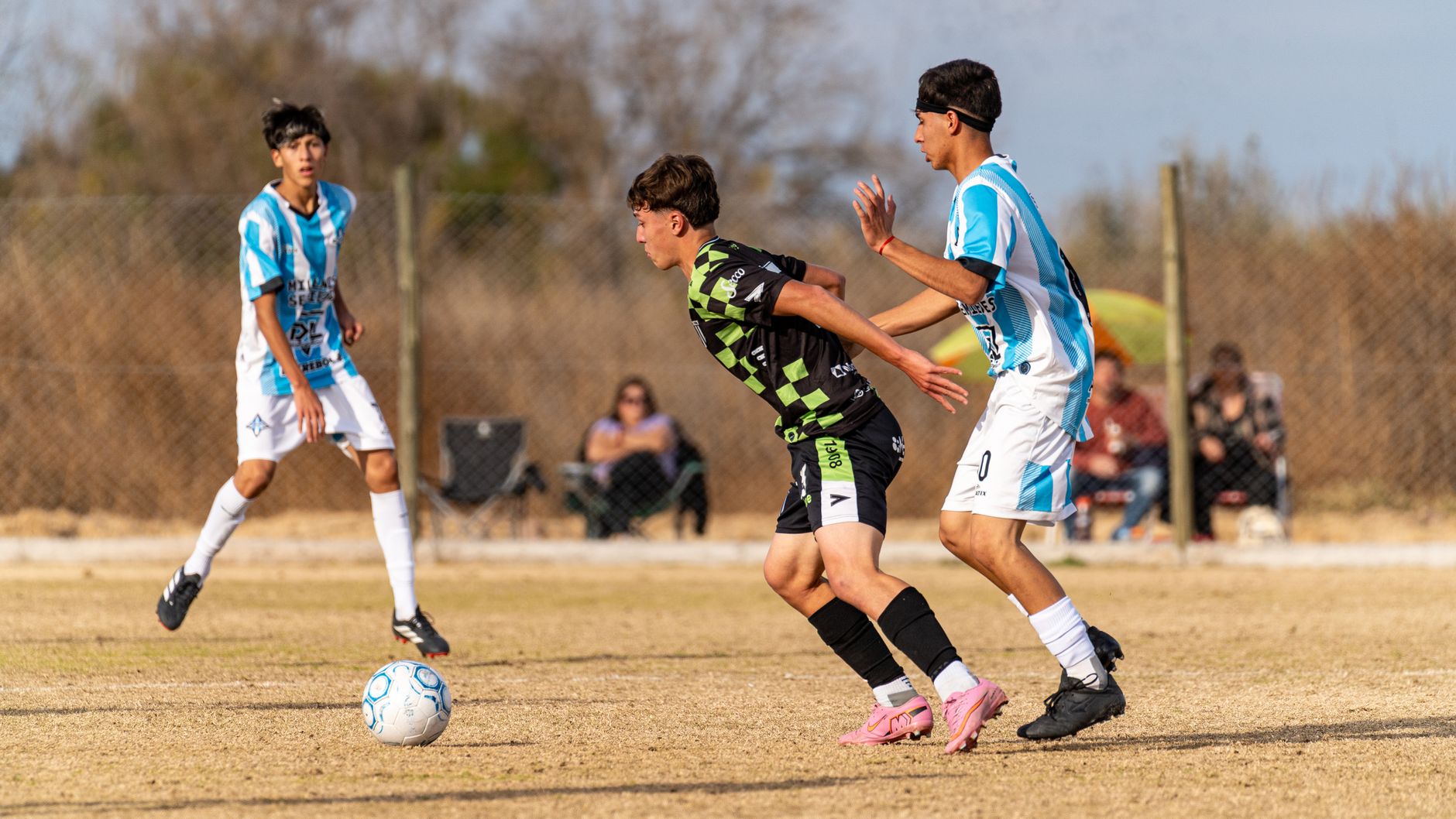
Photo by Franco Monsalvo on Pexels
Which Football Team Should You Pick?
Choose Argentina for the strongest overall balance, France when replacement quality and tactical options matter most, and Brazil when you are willing to accept greater uncertainty for exceptional attacking upside. The correct choice depends on whether your priority is reliability, depth, or potential rather than which badge feels most familiar.
For a long tournament, I would begin with Argentina because its 2022 World Cup experience provides evidence of recovery under pressure, not merely a pleasant historical story. France would be my alternative when the schedule is crowded or injuries appear, since a deeper squad can absorb disruption better than a narrow starting XI. Brazil becomes especially interesting when its midfield structure is settled and its transition defense looks coordinated, but I would want to see those details in competitive matches before becoming too confident. This is also why current 2026 information matters. The tournament will be hosted across the United States, Canada, and Mexico, and travel, climate, kickoff times, and venue distances may affect preparation in ways older World Cup comparisons cannot capture. Match Daily’s role is to track those changes through team tactics, player statistics, predictions, and tournament news, while readers should keep their own judgment firmly switched on.
[Internal Link: 2026 World Cup schedule and host cities]
If you are choosing a team to follow, start with the style of football you enjoy rather than a promise of victory. Argentina rewards supporters who value control and competitive discipline; France offers explosive athleticism and layers of alternatives; Brazil provides invention, risk, and the possibility of something unforgettable. None is guaranteed to win, and that uncertainty is not a flaw in the sport. It is the reason experienced supporters remain cautious, even after they think they have seen every possible way for a match to go wrong. For responsible sports fans, use information for analysis and entertainment, set personal limits, and avoid treating football predictions as financial advice.
Ready to follow the latest team developments before the 2026 FIFA World Cup?
Frequently Asked Questions
Q: What is a football team?
A: A football team is a group of players selected to compete together in a football match or competition. It may represent a national association, a football club, a school, a region, or an informal group, depending on the sport and setting. A matchday team usually includes starting players and substitutes, while the wider squad may include additional players who train but are not selected for a particular fixture. In association football, 11 players start on each side under standard rules, although squad and substitution regulations vary by competition.
Q: What is the difference between a football team and a football club?
A: A football team is the playing group, while a football club is the wider organization that supports one or more teams. A club may employ coaches, medical staff, scouts, administrators, and youth-development personnel, and it may operate facilities, membership programs, and commercial activities. A national team such as Argentina is assembled from players belonging to separate clubs, whereas a club team such as Real Madrid normally trains and competes together throughout the season. The distinction is essential when comparing club football with international football.
Q: How do you compare football teams before a match?
A: Compare recent form, confirmed lineups, injuries, tactical matchups, defensive transitions, and set-piece strength before considering reputation. Start by identifying how each team builds possession, presses, and responds after losing the ball, then check whether key players are available. Argentina, France, and Brazil may all look powerful on paper, but their likely performance changes when a central midfielder, goalkeeper, or center-back is missing. It is also sensible to review official competition information and reliable reporting rather than relying on social-media claims.
Q: Is Argentina the best football team for 2026?
A: Argentina is a leading 2026 contender and the strongest overall pick in this ranking, but no team is guaranteed to win. Its main evidence is the 2022 FIFA World Cup title, a cohesive tactical structure, and players experienced in knockout football. However, age, injuries, selection changes, and opposition matchups will affect the next tournament. Supporters should reassess Argentina after each international window instead of assuming that the 2022 squad and circumstances will be repeated exactly.
Q: Why does football team depth matter?
A: Squad depth matters because tournaments involve multiple matches, travel, injuries, suspensions, and changing tactical demands. France illustrates the advantage particularly well, as it can often replace a high-level starter without losing all of its pace, athleticism, or technical quality. Depth is useful only when substitutes understand their roles and preserve the team’s spacing, though; a famous bench can still create imbalance if replacements have incompatible profiles. Check positional coverage rather than simply counting well-known names.
Q: What are common problems when evaluating a football team?
A: The most common problems are confusing fame with current ability, overvaluing one recent result, ignoring injuries, and treating possession as proof of control. Brazil’s five World Cup titles demonstrate historical excellence but cannot independently measure its 2026 defensive organization. Similarly, a team may hold 60% possession while conceding dangerous counterattacks after poor rest-defense positioning. Use several indicators together, including chance quality, field position after turnovers, set-piece defending, and the strength of recent opponents.
Q: Does Match Daily provide guaranteed football predictions?
A: No, Match Daily provides football analysis, predictions, team tactics, player statistics, and tournament coverage, but it cannot guarantee match outcomes. Football contains randomness through deflections, refereeing decisions, injuries, penalties, and short-term changes in form. Readers should use Match Daily as an information source, verify current team news, and treat any gambling-related activity as entertainment rather than dependable income. Set a personal budget before participating, never chase losses, and follow the rules applicable in your location.