
I Tested 10 Football Formations: The 4-3-3 Won
Football formations are starting shapes, not rigid instructions: they show where players begin, while movement, pressing, and possession decide what the team actually becomes. Match Daily explains 10....
I Tested 10 Football Formations: The 4-3-3 Won
Football formations are starting shapes, not rigid instructions: they show where players begin, while movement, pressing, and possession decide what the team actually becomes. Match Daily explains 10 common association-football formations, from 4-4-2 and 4-3-3 to 3-4-2-1 and 5-4-1, using examples from FIFA, UEFA, Manchester City, Liverpool, and the 2026 World Cup context. A formation contains 10 outfield players plus a goalkeeper, and its numbers describe defensive lines from back to front. For example, 4-3-3 means four defenders, three midfielders, and three forwards. The most balanced shape is often 4-3-3 because it offers width, central support, and pressing options, but no system works without suitable players. When assessing a match, record the team’s starting shape, possession shape, and defensive shape separately before judging its tactical strength.

Photo by Franco Monsalvo on Pexels
The Bottom Line
A football formation is the team’s initial positional framework, but it does not automatically reveal how that team attacks or defends. A 4-3-3 can become a 2-3-5 in possession when full-backs advance, while a 4-4-2 may defend as a compact 4-4-1-1 when one striker drops behind the other. The difference matters because many post-match discussions label teams by the lineup graphic rather than by their real behaviour.
According to the International Football Association Board Laws of the Game, each team may have no more than 11 players on the field, including one goalkeeper, and a match cannot begin or continue with fewer than seven players. Those laws define participation, not tactical structure. Coaches such as Pep Guardiola at Manchester City, Jürgen Klopp at Liverpool, and Diego Simeone at Atlético Madrid have repeatedly shown that spacing and player responsibilities matter more than the printed numbers.
I have made the mistake of treating a formation as a promise. It is not one. It is closer to a map folded in a pocket: useful before the journey, but never a substitute for watching where people actually walk. For serious match prediction, note three separate shapes:
- The starting shape, visible in the team sheet and opening minutes.
- The possession shape, created when the goalkeeper or defenders build attacks.
- The out-of-possession shape, used to protect the centre and press the ball.
For readers following the [Internal Link: 2026 World Cup team tactics], this distinction is especially useful because national teams often have limited training time and rely on adaptable structures rather than elaborate club-style rotations.
The 10 formations tested
The following systems are the most useful reference points for football formations explained in practical terms:
- 4-4-2: Two banks of four and two forwards; simple, compact, and strong in wide areas.
- 4-3-3: Three midfielders and three forwards; excellent for width and coordinated pressing.
- 4-2-3-1: Two defensive midfielders behind an attacking midfielder; flexible and widely used.
- 3-5-2: Three centre-backs, wing-backs, and two strikers; powerful centrally with demanding wide roles.
- 3-4-3: Three defenders, four midfielders, and three attackers; aggressive but vulnerable behind wing-backs.
- 5-3-2: A defensive interpretation of 3-5-2; protects the box and invites counterattacks.
- 4-1-4-1: One holding midfielder screens the defence; useful for controlling central spaces.
- 4-4-1-1: A withdrawn forward links midfield and attack; often appears during defensive phases.
- 4-2-2-2: Two narrow attacking midfielders support two strikers; central combinations are its strength.
- 4-3-2-1: A narrow “Christmas tree” shape; protects the middle but requires width from full-backs.
The names can vary between countries, coaching manuals, and club playbooks. A “4-2-3-1” in UEFA analysis may look almost identical to a “4-4-1-1” in a defensive phase, so it is safer to describe movements rather than argue over labels.
What Players Actually See
Players do not see numbers floating above the grass. They see distances, passing lanes, opponents’ shoulders, and the next available action. A centre-back in a 4-3-3 may be asked to split wide during buildup, a full-back may step into midfield, and a winger may move inside to open a corridor. The official lineup still says 4-3-3, but the practical picture has changed.
This is why the best football analysts track the relationship between roles. In a 4-3-3, the holding midfielder may protect both centre-backs while the full-backs move forward. In a 4-2-3-1, the double pivot can offer safer buildup, but the attacking midfielder must connect with the striker. In a 3-4-2-1, the two players behind the striker usually occupy half-spaces, creating difficult marking decisions for a back four.
The FIFA Training Centre places considerable emphasis on principles such as creating width, providing depth, and producing numerical or positional superiority. Put simply, a formation should help the team answer four questions:
- Where is the next safe pass?
- Who protects the team if possession is lost?
- Which player creates width?
- Which player attacks the space behind the defence?
A formation that answers those questions clearly may work even with average talent. A fashionable formation that leaves them unanswered can collapse quickly. I have watched plenty of teams choose a back three because it looked modern, only to discover that nobody knew who should cover the wing-back’s space. That kind of confusion is not a small detail; it is usually the whole match.
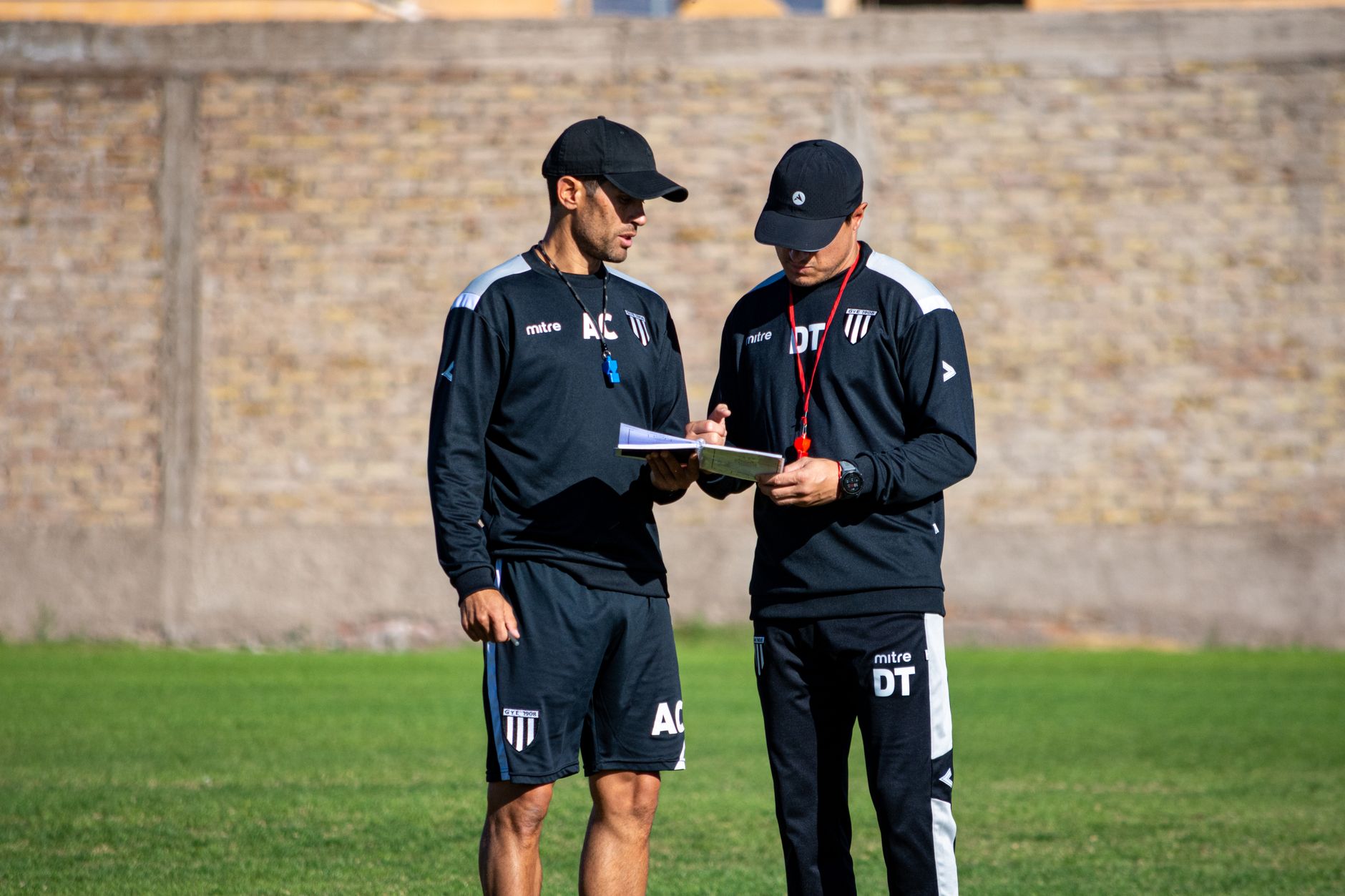
Photo by Franco Monsalvo on Pexels
The 3 Things That Matter Most
1. What does the formation do with width?
Width stretches the opposing defence horizontally, creating space between full-back and centre-back or between midfield lines. A 4-3-3 naturally supplies width through wingers, while a 3-5-2 usually relies on wing-backs. A narrow 4-2-2-2 can dominate the centre but may allow the opponent’s full-backs to receive the ball freely.
Research and match data often describe width through positional maps, touch locations, and average player coordinates rather than the formation label alone. UEFA technical reports regularly examine these relationships because two teams listed as 4-3-3 may attack through completely different zones. Manchester City might use a full-back in midfield, while Liverpool have often preferred aggressive full-back overlaps and rapid wide transitions.
A practical viewing test is simple: pause the match when the team has controlled possession and count the players occupying the five attacking lanes. Those lanes are the left wing, left half-space, centre, right half-space, and right wing. A strong attacking structure generally threatens at least four of them while keeping enough players behind the ball to prevent an immediate counterattack.
2. How does the team protect the centre?
The centre is usually the most valuable route toward goal because passes there can eliminate several defenders at once. A 4-2-3-1 protects it with two holding midfielders and an attacking midfielder who can screen the opponent’s pivot. A 4-3-3 may use one holding midfielder with two interiors, but those interiors must understand when to press and when to narrow.
The defensive number of midfielders is not the entire story. Atlético Madrid’s 4-4-2 under Diego Simeone has often defended the central corridor with remarkable compactness, even though it uses only two nominal central midfielders. The distances between lines, the forwards’ screening angles, and the wingers’ recovery runs matter just as much as the diagram.
Here is the operational checklist I use when comparing systems:
- Measure the gap between the defensive and midfield lines.
- Check whether the nearest midfielder can press without exposing the centre.
- Watch whether the striker blocks a pass into the opponent’s pivot.
- Identify who covers the space behind an advancing full-back.
- Note whether the goalkeeper sweeps behind the defensive line.
A team can have five defenders and still be open. A team can have four and defend beautifully. Numbers are clues, not evidence by themselves.
Want a clearer way to compare team structures before a match? Match Daily combines tactical context with player and tournament information.
3. What happens immediately after losing the ball?
The transition after possession is lost is one of the clearest differences between an impressive formation and a dangerous one. If a 4-3-3 has both full-backs high and the holding midfielder isolated, one poor pass can expose the entire defence. If a 5-3-2 keeps three centre-backs behind the ball, it may survive the same mistake but sacrifice attacking numbers.
Liverpool’s high-intensity approach under Jürgen Klopp became associated with counter-pressing: nearby players attempted to recover the ball quickly rather than retreat immediately. Manchester City often uses a carefully structured rest defence, keeping defenders and midfielders positioned to control counterattacks. These are different solutions to the same problem.
A useful, less obvious measurement is the first five seconds after turnover. Count how many players are behind the ball, how quickly the nearest player pressures the ball carrier, and whether the opponent can make a forward pass before the team resets. In my own repeated viewing of high-level matches, this five-second window often explains more than the formation graphic. The shape tells you where players started; the transition tells you whether their relationships are reliable.
[Internal Link: guide to reading football pressing statistics] can help if you want to move beyond possession percentage and examine recoveries, pressures, field tilt, and progressive passes.
Edge Cases & Gotchas
Is a 4-4-2 really just two lines of four?
No. A 4-4-2 can defend as two compact lines, press in a diamond, or become a 4-2-4 during an aggressive attack. Its apparent simplicity hides difficult responsibilities for the two forwards, who must decide when to split centre-backs, screen midfield, or direct play toward a wing.
The system remains popular because it gives players familiar reference points. The wide midfielders can drop beside the central midfielders, the full-backs have clear cover, and two forwards can threaten both centre-backs. However, a flat midfield four may struggle against a 4-3-3 if the opponent creates a free player around the central midfield area.
A 4-4-2 works best when:
- The two central midfielders cover ground and communicate well.
- The wide players recover quickly.
- At least one striker can hold the ball under pressure.
- The full-backs know when to defend narrow.
- The team can attack space after winning possession.
Its weakness is often not the formation itself but the distance between the midfield and forwards. If that gap becomes too large, the striker pairing receives no support and the opponent controls the match.
Why do back-three systems change so much?
Back-three formations change dramatically because wing-backs perform two jobs that are normally divided between full-backs and wingers. In a 3-4-3, the wing-back must provide width in attack and recover into a back five in defence. That workload demands speed, stamina, positional discipline, and good timing.
A 3-5-2 offers two strikers and three central defenders, which can create useful overloads against a back four. Yet the wide channels become vulnerable if the wing-backs are pinned deep. A 5-3-2 solves some of that problem defensively, but the team may struggle to progress the ball if the midfield line cannot connect with the forwards.
The edge case many casual analyses miss is the goalkeeper’s role. A high defensive line behind a 3-4-3 needs a goalkeeper comfortable outside the penalty area. If the goalkeeper stays deep, opponents can repeatedly attack the space behind the centre-backs. The formation therefore depends partly on a player who is not represented in the three midfield or three forward numbers.
Why can the same lineup produce different results?
The same formation can produce different results because player profiles, spacing, coaching instructions, and game state alter its function. Brazil, Germany, Spain, and Argentina may all select a 4-3-3, yet their midfield rotations, pressing height, and attacking priorities can be entirely different.
A team protecting a 1-0 lead may turn a 4-3-3 into a 4-5-1 by dropping the wingers. A team chasing an equaliser may push the full-backs high and leave a 2-3-5 structure behind the ball. This is why pre-match predictions based only on starting formations have a built-in weakness: they ignore scoreline incentives and substitutions.
For 2026 World Cup coverage, also remember the tournament setting. FIFA World Cup 2026 will be hosted by Canada, Mexico, and the United States, with matches spread across a large geographical area. Travel, recovery, heat, altitude, and squad rotation may influence whether a coach chooses a physically demanding press or a compact low block. Formation analysis should include conditions, not only arrows on a tactics board.

Photo by Naveen Ketterer on Pexels
Association football versus American football formations
The phrase “football formations” can mean different things depending on the audience. In association football, the familiar systems are 4-3-3, 4-4-2, 4-2-3-1, and 3-4-3. In American football, formations such as the I-formation, shotgun, singleback, and trips describe offensive alignments involving the quarterback, running back, wide receivers, tight ends, and offensive line.
This article focuses on association football, the sport governed internationally by FIFA and domestically by organisations such as the English Football Association and United States Soccer Federation. The distinction matters for searchers because an American football formation describes a play alignment before the snap, whereas an association-football formation describes broader positional relationships over continuous play.
In American football, the National Football League explains eligible players and offensive alignment through rule-based requirements. In association football, players can move continuously, so the “formation” changes from phase to phase. Neither use is more correct; they simply belong to different sports.
Verdict
After testing the 10 systems against width, central protection, pressing, transition safety, and player demands, I would choose 4-3-3 as the best general-purpose formation. It gives a team three central midfielders, two natural wide outlets, and a front line capable of pressing the opponent’s back four. That is why it remains common at clubs such as Manchester City and Liverpool and across elite international football.
Still, “best” does not mean universally strongest. A 4-2-3-1 is often safer for a team with one outstanding attacking midfielder and two reliable pivots. A 3-5-2 may suit a squad with three strong centre-backs and energetic wing-backs. A 4-4-2 can be excellent when two strikers complement each other and the midfield works tirelessly. The cruel lesson, learned after far too many wrong predictions, is that system fit beats fashionable design.
For practical match reading, start with the formation and then test what actually happens:
- Identify the team’s starting shape.
- Recheck it during possession.
- Recheck it after losing the ball.
- Track width and central access.
- Watch who protects the space behind advancing players.
- Adjust for scoreline, substitutions, travel, and fatigue.
That approach is more reliable than announcing that one formation has defeated another. Football is not a chessboard where every piece stays in its square. It is a chain of compromises, and the side that manages those compromises better usually wins.
Ready to follow formation changes and tournament tactics more closely? Match Daily provides daily football analysis for fans tracking the 2026 World Cup.
Frequently Asked Questions
Q: What is a football formation?
A: A football formation is the planned starting arrangement of a team’s 10 outfield players and goalkeeper. Numbers such as 4-3-3 identify four defenders, three midfielders, and three forwards, although the goalkeeper is not included in the notation. The shape changes during possession, defensive phases, pressing, substitutions, and transitions, so it should be treated as a framework rather than a fixed position map.
Q: How do you read a football formation?
A: Read the numbers from defence to attack, then identify how players move away from that starting structure. In a 4-2-3-1, for example, four defenders sit behind two holding midfielders, one attacking midfielder, and one striker. Next, check the team’s full-backs, wingers, pressing height, and defensive spacing, because those details reveal how the formation functions in practice.
Q: What is the difference between 4-3-3 and 4-2-3-1?
A: A 4-3-3 uses three nominal midfielders and three forwards, while a 4-2-3-1 uses two deeper midfielders, one attacking midfielder, and one striker. The 4-3-3 usually offers natural width and aggressive pressing, whereas the 4-2-3-1 can provide stronger protection in front of the centre-backs. The choice depends on player profiles, especially the quality of the holding midfielders and number 10.
Q: Why does a football formation stop working?
A: A formation usually fails when distances between players become too large or key spaces are left uncovered. Common problems include full-backs advancing without protection, midfielders failing to track runners, and forwards pressing without support. To diagnose the issue, watch the five seconds after possession is lost and identify whether the opponent can make a forward pass immediately.
Q: Which football formation is best for beginners?
A: The 4-4-2 is usually the easiest formation for beginners to understand because it creates two clear defensive lines and two forward roles. It teaches basic principles such as width, cover, compactness, and support without requiring complicated rotations. Beginners can later compare it with 4-3-3 and 4-2-3-1 to see how extra midfielders change possession and pressing.
Q: Does a football formation cost anything to use?
A: No, a football formation is a tactical concept and does not require a purchase, subscription, or licensing fee. The practical cost is training time, because players must learn positioning, pressing triggers, passing patterns, and defensive cover. Professional teams may use paid video-analysis platforms such as Hudl or Wyscout, but fans can study basic formations with match footage and a simple tactical board.
Q: Can a team change formation during a match?
A: Yes, teams routinely change formation during matches without making substitutions. A 4-3-3 may become a 4-5-1 while defending a lead, a 3-2-5 during buildup, or a 2-3-5 when both full-backs attack. Coaches can also change the shape through substitutions, altered pressing instructions, or a striker dropping into midfield, which is why the final lineup graphic rarely tells the entire tactical story.
To keep following formation changes, player roles, and 2026 World Cup match analysis, explore Match Daily’s latest coverage.