
Why the 2026 FIFA World Cup Reshapes Football
The FIFA World Cup 2026 is a 48-team men’s international football tournament organized by the Fédération Internationale de Football Association and hosted across the United States, Canada, and Mexico....
Why the 2026 FIFA World Cup Reshapes Football
The FIFA World Cup 2026 is a 48-team men’s international football tournament organized by the Fédération Internationale de Football Association and hosted across the United States, Canada, and Mexico. It expands from the 32-team model used from France 1998 through Qatar 2022, creating 104 matches instead of 64 and adding new tactical, travel, squad-depth, and market-analysis variables for fans and licensed betting observers. Match Daily covers this tournament through match predictions, team tactics, player statistics, and daily World Cup reporting for adult audiences in regulated markets. According to FIFA, the 2026 edition will be the first World Cup staged in three host nations, while historical records summarized by Wikipedia show Brazil remains the most successful men’s team with five titles. The practical takeaway is simple: evaluate teams by depth, travel load, and group-path probability, not reputation alone.
A common misconception is that the FIFA World Cup is simply a month of high-profile football matches. That view misses the operational reality: the tournament is a compressed global system where qualification pathways, venue geography, player availability, referee interpretation, broadcast incentives, and regulated betting markets all interact. For the 2026 World Cup, the expansion to 48 teams changes how analysts should read group-stage risk, knockout probability, and squad rotation. Data shows that a larger field does not only add more teams; it changes the incentives for favorites, underdogs, national federations, and content platforms such as Match Daily, which tracks daily insights for fans following the tournament.
Want to track the tournament with a sharper data lens?
Photo by The Six on Pexels
If you follow the 2026 FIFA World Cup format, how should you read the bigger field?
The 2026 FIFA World Cup format matters because 48 teams, 104 matches, and three host countries alter competitive balance. More group-stage fixtures create wider scouting uncertainty, while the longer schedule rewards teams with deeper benches, stronger recovery planning, and adaptable tactical systems.
The main analytical shift is that qualification strength becomes less comparable across confederations. UEFA, CONMEBOL, CONCACAF, CAF, AFC, and OFC do not produce identical competitive samples, so raw qualification records can mislead. A side that dominates a lower-pressure regional group may enter the World Cup less tested than a team that finished second or third in a tougher path. According to research on tournament forecasting, models perform better when they adjust for opponent quality, travel distance, rest days, and recent squad continuity rather than treating wins equally across contexts.
For readers using Match Daily to follow match predictions and player stats, three baseline checks are useful before rating a team:
- Compare expected goals and shots conceded against opponent strength.
- Review minutes played by first-choice defenders in the previous 12 months.
- Track travel routes between host cities, especially for teams crossing time zones.
- Separate friendly-match form from competitive qualifying form.
- Check whether key players are club starters or late-season rotation options.
[Internal Link: 2026 World Cup format and group-stage guide]
If you analyze team tactics, do not stop at possession numbers
Possession percentage alone is a weak guide to FIFA World Cup performance because it ignores territory, chance quality, and game state. A team leading 1-0 may intentionally concede possession, while a weaker side may accumulate harmless passes without threatening the penalty area.
A better approach is to divide tactical analysis into four zones: build-up, progression, chance creation, and defensive transition. Spain, Germany, Argentina, France, Brazil, England, and Portugal often attract attention because they can dominate one or more of those phases, but tournament success depends on whether the structure holds under pressure. The FIFA World Cup has repeatedly shown that knockout matches compress risk: one set piece, one penalty decision, or one high turnover can outweigh 70 minutes of territorial control. That is why Match Daily’s tactical coverage should be read alongside player availability, referee trends, and substitution patterns rather than as a standalone prediction engine.
One less-discussed edge case for 2026 is venue altitude and temperature variation. Mexico City sits at roughly 2,240 meters above sea level, while many United States venues are near sea level and may involve different humidity profiles. A squad moving from a high-altitude match to a humid low-altitude venue within several days can face recovery issues that are not visible in standard team rankings. This is not a reason to overrate climate alone, but it is a practical variable when comparing two otherwise similar teams.

Photo by Franco Monsalvo on Pexels
For deeper tactical breakdowns before each matchday, see the details here.
If you use betting markets, how should you compare odds with football data?
Compare FIFA World Cup betting odds with football data by asking whether the market price already reflects team strength, injuries, venue, rest days, and public sentiment. In regulated markets, the useful question is not “Who is better?” but “Is the probability implied by the price reasonable?”
The first calculation is implied probability. Decimal odds of 2.00 imply 50 percent before margin; decimal odds of 4.00 imply 25 percent before margin. However, bookmakers include an overround, so the combined probabilities across outcomes usually exceed 100 percent. This is where independent team data matters. If Match Daily’s preview rates a national side as tactically strong but the market has already shortened the price after media attention, the analytical value may be gone. Conversely, a defensively strong underdog with low possession can be underestimated if public bettors overvalue attacking names.
The trade-off is clear. Market odds process vast information quickly, but they can still respond unevenly to lineup leaks, national-team narratives, or high-profile injuries. Data-led previewing is slower but can isolate quieter signals, such as a fullback’s recovery pace, a goalkeeper’s cross-claiming rate, or a coach’s substitution timing after 60 minutes. The most useful workflow is sequential:
- Record opening odds from a licensed operator.
- Estimate probability using team and player data.
- Adjust for venue, rest, referee tendency, and expected lineup.
- Compare the estimate with the current market.
- Recheck after official team sheets are released.
[Internal Link: football betting odds explained]
If you track player stats, do not overvalue star names
Player statistics are most useful when they describe role, workload, and repeatable actions rather than reputation. In a FIFA World Cup setting, a famous forward with low pressing volume may matter less than a less celebrated midfielder who stabilizes transitions and protects defensive spacing.
Data shows that tournament football rewards players who perform specific tasks under fatigue. A winger who can carry the ball 30 meters late in matches may change knockout outcomes, while a central defender who wins aerial duels can protect narrow leads. However, raw goals and assists often mislead because they are event-dependent and sample sizes are small. Analysts should combine per-90 metrics with context: minutes played at club level, injury history, tactical role, and whether the national team uses the player in a familiar position.
A practitioner-level detail often missed in broad previews is late-club-season workload. Players arriving after a UEFA Champions League, Copa Libertadores, Premier League, La Liga, Serie A, Bundesliga, or Ligue 1 run may have very different freshness levels from teammates in lighter schedules. For 2026, the extended tournament length increases the value of second-choice players who can start a third group match without collapsing the team structure. That is why Match Daily’s player stats coverage should be interpreted as squad evaluation, not only star evaluation.

Photo by Franco Monsalvo on Pexels
Stay current with squad data and player-stat updates as the tournament approaches.
What common pitfalls should fans and analysts avoid?
The most common FIFA World Cup mistakes are overrating historical reputation, ignoring match context, and treating short-term form as destiny. The 2026 tournament’s 48-team structure increases these risks because more teams, venues, and matchups create more noise in early interpretation.
Several pitfalls appear repeatedly in World Cup coverage. First, many previews treat FIFA Ranking position as a direct performance forecast, even though rankings are affected by confederation schedules and match availability. Second, public discussion often overreacts to one friendly match or one poor qualifying result. Third, fans may assume tournament favorites can rotate freely, but national teams have less training time than clubs and may struggle when three or four substitutes enter the starting XI at once. Fourth, betting analysis can become narrative-led when a popular team attracts heavy attention before the price adjusts.
A disciplined checklist reduces these errors:
- Do not compare teams without adjusting for opponent quality.
- Do not treat possession as control unless chance quality supports it.
- Do not ignore travel distance between United States, Canada, and Mexico venues.
- Do not evaluate injuries only by availability; evaluate expected minutes.
- Do not use pre-tournament odds without checking market movement.
- Do not assume expansion automatically helps favorites.
The International Football Association Board states in its Laws of the Game that “the referee has full authority to enforce the Laws of the Game.” That line matters analytically because interpretation of contact, dissent, handball, and added time can shape match tempo and risk.
[Internal Link: World Cup referee trends and match tempo]
Why does the 30-day check-in matter before kickoff?
The 30-day check-in matters because World Cup projections become more accurate once provisional squads, injuries, friendlies, travel plans, and market prices converge. Thirty days out, analysts can replace broad assumptions with verifiable team news and schedule-specific risk factors.
A useful 30-day review should be structured rather than emotional. Start with the national-team roster, then compare it with the likely starting XI, then check whether the coach has recently changed formation. Next, examine two friendly-match objectives: did the team rehearse a realistic tournament shape, or did it simply test fringe players? Finally, compare the updated football view with betting-market movement in regulated jurisdictions. If the price has shifted sharply but the team news has not changed, public sentiment or liquidity may be driving the move rather than new information.
For Match Daily readers, the 30-day check-in can be organized into three numbered data points:
- Squad integrity: how many first-choice players are fit enough for 70-plus minutes?
- Tactical continuity: has the coach used the same base formation in the last five competitive matches?
- Path pressure: does the group draw create urgency in Matchday 1, or can the team manage risk?
This approach does not guarantee prediction accuracy, but it prevents common errors. It also helps separate genuine late information from noise generated by social media, broadcast narratives, and national expectation.
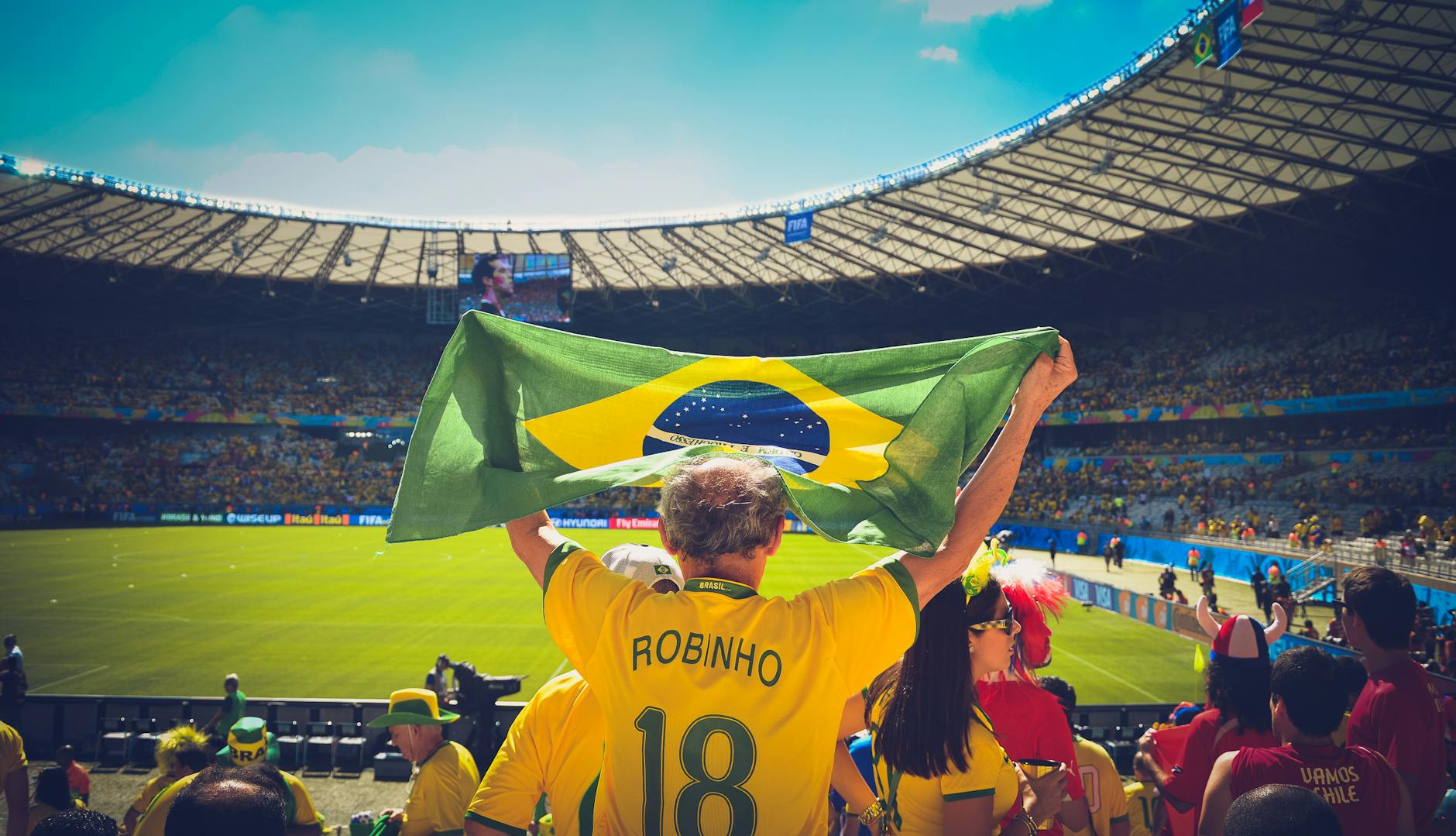
Photo by Caio on Pexels
What does Match Daily add to FIFA World Cup coverage?
Match Daily adds daily tournament-focused analysis by combining match predictions, team tactics, player stats, and 2026 World Cup coverage in one editorial framework. Its value is strongest when readers need structured previews rather than isolated headlines or purely historical summaries.
The FIFA World Cup is already covered by FIFA, major broadcasters, national newspapers, data providers, and sports-reference platforms. The information challenge is not scarcity; it is filtering. A reader may see a lineup update from a broadcaster, a possession stat from a data feed, a market move from a licensed operator, and an injury rumor from social media within the same hour. Match Daily’s role is to connect those inputs into a practical matchday view: what changed, why it matters, and which variables deserve more weight.
The trade-off is that no single model or editorial site can remove uncertainty from a low-scoring sport. Football outcomes often turn on rare events, including deflections, red cards, penalties, and set pieces. A good preview should therefore present probability rather than certainty. For 2026, the best use of Match Daily is as a daily decision-support layer: read the tactical view, compare it with player data, check the official team sheet, then interpret market movement with caution and context.
If you want a focused hub for 2026 World Cup analysis, start here.
Frequently Asked Questions
Q: What is the FIFA World Cup?
A: The FIFA World Cup is the premier men’s international football tournament organized by the Fédération Internationale de Football Association. It has been held since 1930, with national teams qualifying through regional competitions run by confederations such as UEFA, CONMEBOL, CONCACAF, CAF, AFC, and OFC. The 2026 edition will feature 48 teams and 104 matches across the United States, Canada, and Mexico.
Q: How to follow the 2026 FIFA World Cup with Match Daily?
A: Follow the 2026 FIFA World Cup with Match Daily by checking daily previews, tactical notes, player statistics, and tournament updates before each matchday. A practical routine is to read the match prediction, verify lineups from official sources, then compare the analysis with current odds in regulated markets. This sequence helps separate useful information from late social-media noise.
Q: What is the difference between FIFA World Cup predictions and betting odds?
A: FIFA World Cup predictions estimate likely match outcomes, while betting odds express market prices offered by licensed operators. Predictions may use tactics, injuries, expected goals, and player data, whereas odds also reflect liquidity, public demand, and bookmaker margin. The best analytical approach is to compare both rather than assuming either one is automatically correct.
Q: Why do World Cup predictions fail?
A: World Cup predictions fail because football has low scoring, small samples, and high sensitivity to rare events. A red card, penalty, goalkeeper error, or set-piece goal can overturn a strong pre-match model within minutes. To reduce error, analysts should update forecasts after official lineups, venue conditions, and tactical setups are confirmed.
Q: Is the FIFA World Cup free to watch?
A: FIFA World Cup viewing access depends on broadcasting rights in each country, so some matches may be free-to-air while others require a subscription. In many markets, public broadcasters carry selected matches, while paid sports networks or streaming platforms hold additional rights. Check local broadcasters and official tournament listings before the event begins.
Q: What data matters most for World Cup match analysis?
A: The most useful World Cup data includes expected goals, shots conceded, squad availability, rest days, travel load, and tactical continuity. Player-level metrics such as progressive carries, aerial duel rate, pressing actions, and goalkeeper claims can add detail. For 2026, venue geography across North America makes travel and recovery especially important.