
2026 Football Fitness Plan: 7 Proven Gains
A football fitness training plan should combine strength, speed, agility, conditioning, mobility, and recovery rather than relying on long-distance running alone. For amateur and competitive players i...
2026 Football Fitness Plan: 7 Proven Gains
A football fitness training plan should combine strength, speed, agility, conditioning, mobility, and recovery rather than relying on long-distance running alone. For amateur and competitive players in the United States, the United Kingdom, and worldwide, a practical weekly structure can improve repeated sprint ability, change-of-direction speed, and injury resilience within 6–8 weeks. A balanced plan usually includes 2 strength sessions, 2 speed or agility sessions, 1–2 football practices, and at least 1 full rest day. The Fédération Internationale de Football Association (FIFA) and the National Strength and Conditioning Association (NSCA) both emphasize progressive loading, movement quality, and recovery. Match Daily covers football tactics, player statistics, and 2026 World Cup analysis, but the same evidence-based principles apply to everyday players. Start with manageable volume, record sprint times and perceived fatigue, then increase training gradually.
Want a broader performance perspective before planning your week? Match Daily’s football coverage can help connect fitness work with modern team tactics.
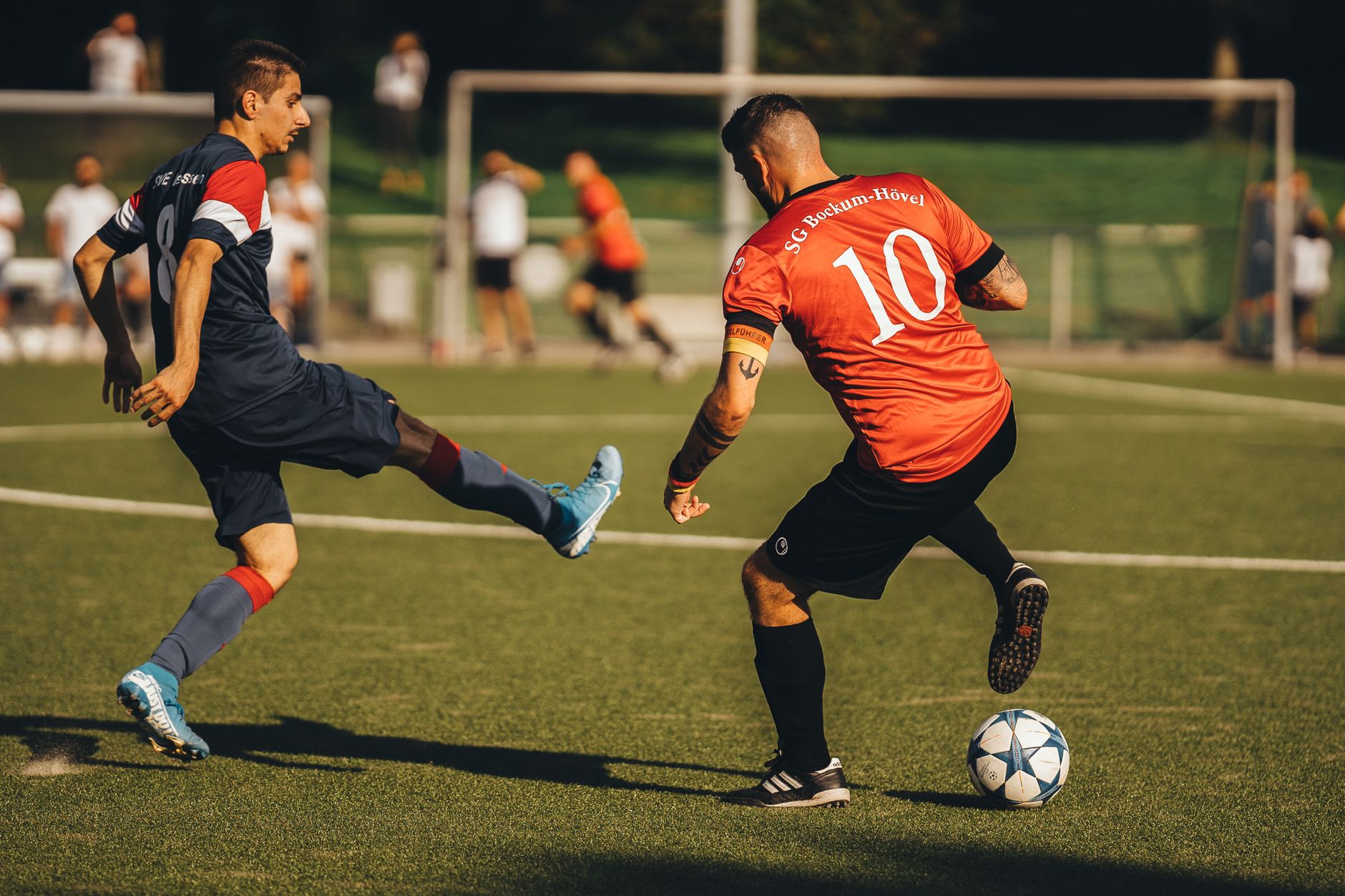
Photo by Omar Ramadan on Pexels
Is a Football Fitness Training Plan Really About Running?
A football fitness training plan is not simply a running schedule; it is a combination of explosive actions, aerobic recovery, strength, agility, and match-specific conditioning. Footballers may sprint, decelerate, jump, tackle, pass, and change direction repeatedly, so training must prepare the body for both high-intensity bursts and lower-intensity recovery periods.
The common misconception is that running more automatically creates better football fitness. It can improve aerobic capacity, but excessive steady-state mileage may leave a player tired without improving acceleration, braking control, or power. According to FIFA Training Centre, modern football conditioning should reflect the intermittent nature of the sport, where intense actions are separated by short recovery periods.
Research published through the Journal of Sports Sciences also supports the use of repeated-sprint training and high-intensity interval work for team-sport athletes. In practical terms, a useful session might include 6–10 sprints of 15–30 metres, followed by controlled recovery, rather than an exhausting 5-kilometre run every day. I learned this rather painfully over the years: tired legs do not automatically become football-ready legs.
A well-designed plan should develop the following qualities:
- Maximum strength for duels, shielding, and tackling.
- Explosive power for jumping, shooting, and acceleration.
- Speed and agility for separation and defensive recovery.
- Aerobic capacity for maintaining work rate across 90 minutes.
- Mobility and stability for safer movement.
- Recovery ability between training sessions and matches.
For more background, see our [Internal Link: guide to football conditioning for beginners] before adding demanding sprint sessions.
A practical weekly structure
A recreational player might begin with two gym sessions, two field sessions, one match, and two recovery-focused days. A semi-professional player may tolerate more work, but the schedule still needs to control high-intensity exposure. The exact volume depends on age, playing level, training history, sleep, nutrition, and injury status.
| Day | Main focus | Example work |
|---|---|---|
| Monday | Recovery | Walking, mobility, light cycling |
| Tuesday | Strength and power | Squats, split squats, jumps, upper-body pressing |
| Wednesday | Speed and technical work | Accelerations, decelerations, passing drills |
| Thursday | Aerobic conditioning | Intervals or small-sided games |
| Friday | Strength and mobility | Posterior chain, trunk, single-leg control |
| Saturday | Match or match simulation | Competitive football |
| Sunday | Rest | Complete rest or gentle mobility |
The table is only a starting point. If Saturday is match day, avoid a heavy lower-body lifting session on Friday. A simple readiness check can prevent many bad decisions: rate sleep, muscle soreness, motivation, and general fatigue from 1 to 5. If the total is unusually low, reduce volume instead of forcing the planned workout.
How Does a Football Fitness Training Plan Handle Position-Specific Demands?
A football fitness training plan handles position-specific demands by changing the balance between sprinting, strength, endurance, agility, and technical fatigue. A winger or full-back usually needs repeated high-speed efforts, while a central midfielder requires substantial aerobic capacity and scanning endurance. Goalkeepers need explosive lateral movement, jumping power, and landing control.
The most useful approach is not to create completely separate training worlds for every position. Instead, keep the basic athletic foundation consistent and adjust the final 20–30 percent of the work according to the player’s role. FIFA World Cup 2026 teams, including those preparing for matches in Los Angeles, Dallas, and New York/New Jersey, will use different tactical systems, but nearly every player still needs acceleration, deceleration, strength, and repeat-effort capacity.
Position-based priorities
Central midfielders
Central midfielders often cover large distances while repeatedly accelerating into support or defensive positions. Their plan should include tempo intervals, small-sided games, unilateral leg strength, and trunk rotation control. A useful conditioning session could involve four blocks of four minutes at a strong but sustainable pace, with two minutes of easy recovery between blocks.
Wingers and full-backs
Wide players need short bursts, curved runs, rapid changes of direction, and the ability to repeat high-speed actions late in a match. Use 10–20-metre accelerations, flying sprints, lateral shuffle drills, and single-leg strength. Do not turn every speed session into conditioning; maximal sprint quality falls quickly when fatigue becomes excessive.
Centre-backs
Centre-backs benefit from lower-body strength, jumping power, short acceleration, and contact resilience. Trap-bar deadlifts, split squats, broad jumps, and 5–10-metre reaction sprints are useful options. However, strength training should not create so much soreness that a defender loses mobility before the weekend match.
Strikers
Strikers require explosive acceleration, braking control, powerful shooting positions, and repeated short movements around defenders. Include resisted sprints, lateral bounds, low-volume plyometrics, and finishing drills after brief bursts of fatigue. The aim is not to make every session exhausting; it is to reproduce the decisive moments that occur near goal.
Goalkeepers
Goalkeepers should prioritize lateral power, reactive movement, landing mechanics, shoulder strength, and short-distance acceleration. Medicine-ball throws, lateral jumps, controlled dives, and low-volume reaction drills are more relevant than long-distance running. A goalkeeper still needs general aerobic fitness, but the movement profile is clearly different from that of a box-to-box midfielder.
Data from World Athletics on sprint development reinforces an important point: speed work should be performed with adequate rest so that technique and force production remain high. I used to rush the rest periods because I thought suffering proved the session was working. It mostly proved that I had stopped sprinting properly.
Want to compare fitness demands with tactical roles and player statistics?
[Internal Link: position-specific football training guide]
What About Beginners, Youth Players, and Returning Athletes?
Beginners, youth players, and athletes returning from injury should use lower starting volume, simpler movement patterns, and slower progression than experienced footballers. A first-stage football fitness training plan may require only 2–3 structured sessions weekly, with sprint distances of 10–15 metres and strength exercises performed with body weight or light resistance.
For young players, the priority is movement competence, enjoyment, technical repetition, and gradual exposure to speed. The American Academy of Pediatrics recommends appropriate supervision and attention to rest, growth, and injury prevention for youth sports. A teenager should not copy the weekly workload of an adult professional simply because the exercises look impressive online.
Returning players need an even more conservative approach. After a hamstring strain, ankle sprain, knee problem, or long break, the body may tolerate straight-line running before it tolerates hard cutting. Progress through stages such as:
- Walking and low-impact aerobic work.
- Easy jogging with pain-free movement.
- Controlled accelerations and decelerations.
- Planned changes of direction.
- Reactive drills and football-specific skills.
- Full training before competitive minutes.
Pain that worsens during a session or remains elevated the next morning is a warning sign, not a character test. The National Health Service advises seeking appropriate medical guidance for persistent pain, swelling, instability, or suspected serious injury. A qualified physiotherapist or sports physician should manage rehabilitation when symptoms are significant.
A safe beginner session
A 45-minute beginner session can include 8 minutes of dynamic warm-up, 10 minutes of basic acceleration technique, 15 minutes of strength circuits, 7 minutes of ball work, and 5 minutes of easy cooldown. Exercises might include glute bridges, reverse lunges, calf raises, side planks, incline push-ups, and controlled step-ups.
Keep two repetitions in reserve during strength exercises rather than training to failure. This leaves enough quality for football practice and makes recovery easier. If you are over 35, returning after several years away, or managing high blood pressure, joint pain, or previous surgery, obtain professional advice before beginning intense interval or plyometric work.
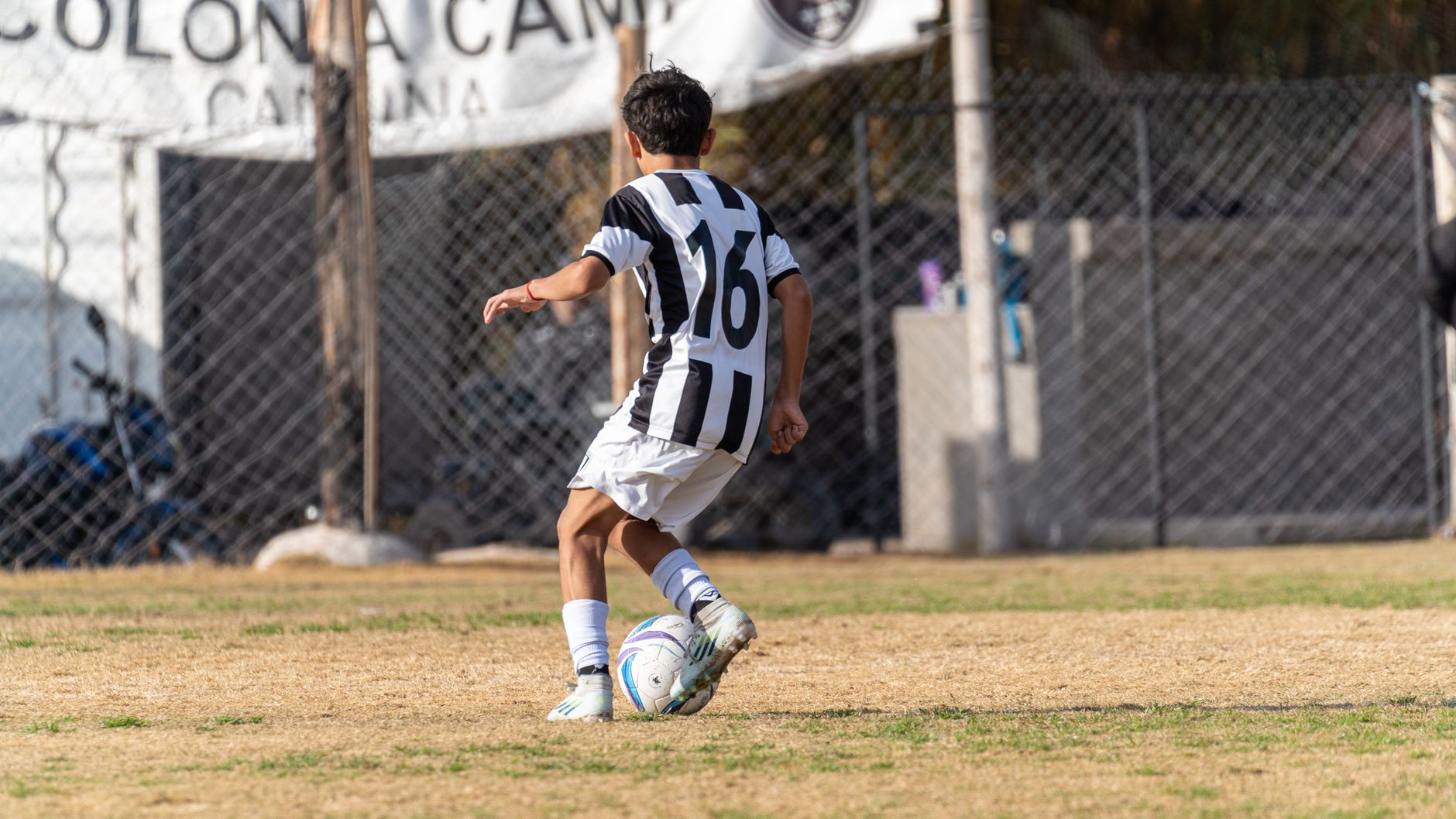
Photo by Franco Monsalvo on Pexels
A small but useful insight is that beginners often improve quickly without adding more sessions. During the first 4–6 weeks, better coordination can produce noticeable gains in sprint mechanics and change-of-direction control before major muscular changes occur. That is why filming one or two drills from the side can be more informative than chasing heavier weights immediately.
Where Does a Football Fitness Training Plan Fail?
A football fitness training plan fails when it ignores workload management, recovery, movement quality, or the player’s actual match calendar. The most common breakdown is stacking several high-intensity days together: hard intervals on Tuesday, maximal sprints on Wednesday, a demanding small-sided game on Thursday, and a match on Saturday.
The second failure is treating strength training as an isolated bodybuilding routine. Large muscles can be useful, but football performance also depends on force application, balance, timing, and the ability to express power quickly. A slow, fatigued squat session may have little value if it repeatedly damages sprint quality and technical sharpness.
The third issue is failing to distinguish soreness from productive adaptation. Normal muscle soreness usually decreases within 24–72 hours, whereas sharp pain, joint swelling, altered gait, or persistent weakness deserves attention. According to the British Journal of Sports Medicine, injury prevention depends on a combination of appropriate loading, neuromuscular preparation, and individual risk management rather than one magic exercise.
Warning signs that the plan needs adjustment
- Sprint times decline by more than 5 percent across repeated tests.
- Resting heart rate remains unusually elevated for several mornings.
- Sleep quality drops for three or more nights.
- Soreness changes running mechanics or kicking technique.
- Motivation and concentration fall sharply.
- Minor aches become more intense after each session.
“The best training plan is the one the athlete can consistently complete,” is a principle often reflected in sports-science practice, even if no single institution owns that exact wording. More formally, the International Olympic Committee emphasizes athlete health, monitoring, and sustainable preparation rather than unnecessary training stress.
One operational tip that many generic plans miss is to monitor high-speed exposure separately from total distance. A player can complete only 4 kilometres in a small-sided session yet accumulate many sharp accelerations and decelerations. Conversely, a relaxed 8-kilometre run may create less neuromuscular stress. Record session duration, perceived exertion, and the number of hard sprint efforts whenever possible.
Recovery is part of the plan
Sleep is one of the most reliable recovery tools, although it is also the one players neglect first. Most adults should aim for approximately 7–9 hours nightly, while adolescent athletes may need more. Eat a meal containing carbohydrate and protein after demanding sessions, drink enough fluid to replace sweat losses, and avoid turning every recovery day into hidden training.
Mobility should be specific rather than random. Use ankle mobility for deeper squatting and better landing, hip mobility for stride mechanics, and thoracic mobility for posture and rotation. Foam rolling may temporarily reduce perceived soreness, but it does not replace sleep, food, progressive loading, or medical care.
See our [Internal Link: football injury-prevention checklist] if recurring pain keeps interrupting your training.

Photo by Fanóš Kolský on Pexels
Should You Try a Football Fitness Training Plan Today?
Yes, you should try a football fitness training plan today if you begin with a manageable baseline, measure progress, and leave enough recovery between intense sessions. The best first step is not a maximal fitness test; it is a repeatable week that your body can tolerate without worsening pain or exhaustion.
A simple four-week starting block could look like this:
- Week 1: Two strength sessions, one easy conditioning session, and one football practice.
- Week 2: Add short accelerations and controlled decelerations.
- Week 3: Introduce repeated-sprint intervals or small-sided games.
- Week 4: Reduce total volume by 20–30 percent while maintaining some intensity.
Track 10-metre sprint time, broad-jump distance, plank quality, training duration, and a daily fatigue score from 1 to 5. Do not expect every number to improve every week. Better football fitness may also appear as improved positioning late in matches, faster recovery between actions, and cleaner technique under pressure.
For a basic strength session, complete three sets of 5–8 repetitions for a squat pattern, a hinge pattern, a single-leg exercise, a push, a pull, and a trunk exercise. Add two or three sets of 3–5 jumps or throws before lifting if you are fresh and technically competent. Rest 2–3 minutes between demanding sets and stop when movement quality deteriorates.
For conditioning, try 6 repetitions of 30 seconds at a hard but controlled pace with 60–90 seconds of easy movement. After two weeks, you may progress to 8 repetitions, but do not increase distance, speed, and frequency simultaneously. This conservative rule is not glamorous, but it prevents the familiar cycle of enthusiasm, overload, injury, and months of lost progress.
Curious how current tournament preparation influences player performance?
Final checklist for better football fitness
Before each training week, ask:
- What is my main football objective?
- Which sessions are genuinely high intensity?
- Where is my full rest day?
- How will I measure progress?
- What pain or fatigue signals require modification?
- Does my plan match my position and upcoming fixtures?
The strongest plan is rarely the most complicated one. It is the plan that develops the qualities football actually demands while leaving the player healthy enough to train again. Match Daily can help you follow the tactical and statistical side of football, while your training log shows whether your body is ready to perform. Start with two focused sessions this week, not seven heroic ones.
Frequently Asked Questions
Q: What is a football fitness training plan?
A football fitness training plan is a structured schedule combining strength, speed, agility, conditioning, mobility, technical work, and recovery. It prepares players for repeated accelerations, decelerations, jumps, contact, and skill execution across a match. Most recreational players can begin with 3–5 total weekly sessions, including football practice and one complete rest day. The plan should be adjusted for age, position, fitness level, injury history, and match frequency.
Q: How do you create a football fitness training plan?
Create one by choosing two strength sessions, one or two speed or agility sessions, one conditioning session, and adequate recovery around your matches. Begin with low volume, such as 6 short accelerations or 6 intervals, then increase only one training variable at a time. Record sprint performance, perceived exertion, soreness, and sleep for at least four weeks. If performance declines repeatedly, reduce volume before adding more exercises.
Q: What is the difference between football conditioning and running?
Football conditioning uses intermittent actions that resemble matches, while ordinary running often uses a continuous pace over a fixed distance. Conditioning may include repeated sprints, small-sided games, change-of-direction drills, and high-intensity intervals. Continuous running can still support aerobic fitness, especially for beginners, but it does not fully train braking, acceleration, reactive movement, or ball-related fatigue. A complete football plan can include both methods.
Q: Is a football fitness training plan useful for beginners?
Yes, a football fitness training plan is useful for beginners when the workload is gradual and technically simple. Start with two structured sessions per week, including body-weight strength exercises, mobility, easy aerobic work, and short accelerations. Avoid maximal sprinting, high-volume jumping, and training to failure during the first 2–4 weeks. Progress only when soreness has settled and movement remains controlled during and after training.
Q: What should you do if football training causes pain?
Stop or modify the exercise if pain is sharp, changes your movement, causes swelling, or becomes worse the following morning. Persistent symptoms, instability, numbness, or suspected ligament or bone injury require assessment by a qualified medical professional or physiotherapist. Gentle movement may be appropriate for mild soreness, but pain should not be repeatedly ignored to complete a schedule. Returning to sprinting and cutting should happen progressively after symptoms improve.
Q: How much strength training do football players need?
Most amateur football players need two strength sessions per week, while one carefully designed session may maintain strength during a congested match period. Each session can include a squat, hinge, single-leg exercise, push, pull, calf exercise, and trunk movement. Use approximately 2–4 sets of 4–10 repetitions, stopping before technique breaks down. Professional players may use more specialized loading, but copying their volume without their recovery resources is usually counterproductive.
Q: How long does it take to improve football fitness?
Noticeable improvements in coordination, movement efficiency, and basic conditioning may appear within 4–6 weeks of consistent training. Strength and sprint gains often require 8–12 weeks, depending on experience, sleep, nutrition, and starting fitness. Test the same drill under similar conditions every two or four weeks rather than judging progress by one tired session. Consistency, not extreme effort, is the most dependable predictor of improvement.
If you want to connect training ideas with tournament analysis, player form, and 2026 World Cup coverage, explore Match Daily for further football insights.